Mexican Caribbean Hoteliers Detail Government's Role
Hoteliers in Quintana Roo have formally presented state and federal officials with a list of government actions they blame for the region's tourism
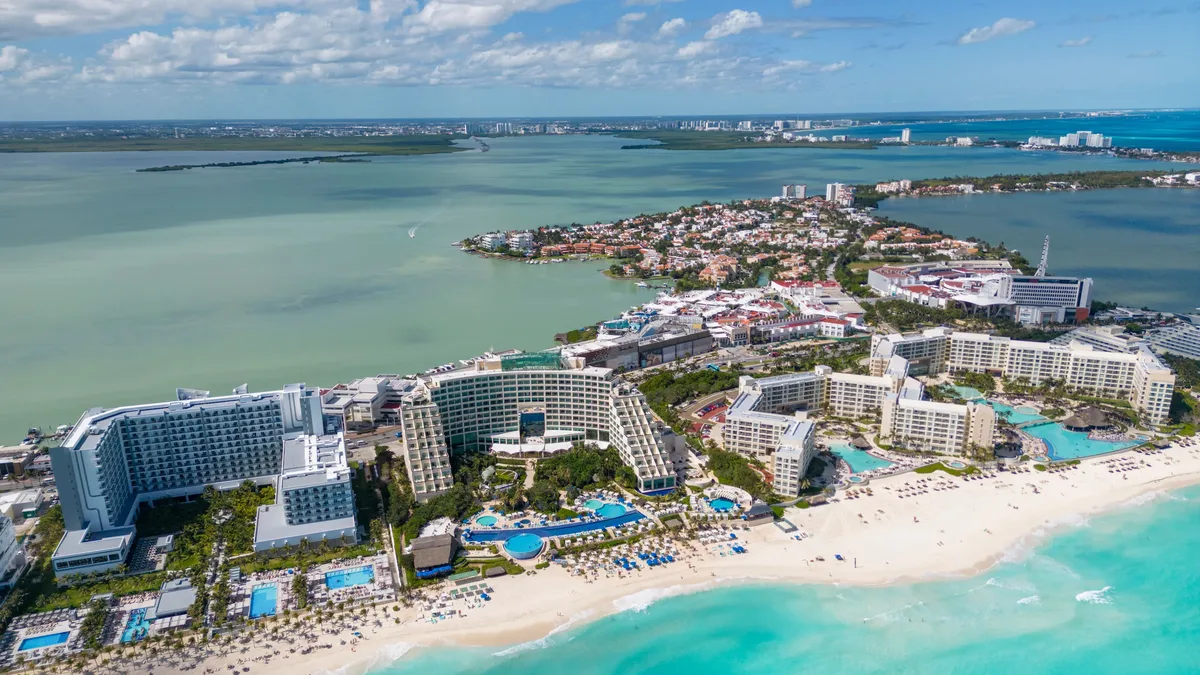
Hoteliers in Quintana Roo have detailed to politicians the degree of blame they assign to government leaders for the current decline of the Mexican Caribbean. The crisis is of a magnitude that risks sector businesses, with some hotels already implementing temporary closures. The industry is facing reduced hotel occupancy due to challenges like flight reductions, exchange rates, and the proliferation of vacation rentals.
This position was presented by the Consejo Hotelero del Caribe Mexicano (CHCM), led by David Ortiz Mena, in a meeting with Governor Mara Lezama and Gloria Guevara, president of the World Travel & Tourism Council. The hotel council, which brings together the state's various hotel associations, called for more resources to be allocated to tourism promotion based on a national and state strategy.
The National Scope of the Challenge
According to the council, current challenges include the unbalanced growth of vacation rentals, an exchange rate that has made Mexican destinations 30% more expensive, and a considerable reduction in available airline seats. David Ortiz Mena argued that this is not solely a problem for the Mexican Caribbean, nor is it explained only by sargassum seaweed. "The drop in Los Cabos and Puerto Vallarta confirms that it is a national challenge," he said.
The Mexican Caribbean must now compete with other destinations for the available flight routes. It also needs to build a positive perception in foreign markets, a task made difficult without a national strategy for promotion and crisis management.
A Call for Strategic Vision and Funding
"Cancun was not an accident: it was a strategic State decision, to attract foreign exchange, investment, and opportunity to this region of the country," Ortiz Mena declared. "We need to regain that long-term vision." In his view, the Consejo de Promoción Turística de Quintana Roo (CPTQ) proves with its results that this task can be done efficiently, and the indicated action would be to give it greater reach.
The hotel council's proposal is to increase the resources the State Government allocates to promotion to 30% or 50% of what is collected from the Lodging Tax. They also request that the federal government reinvest part of the Non-Resident Fee into this area.
Seeking Conditions to Compete
Ortiz Mena cited the sargassum combat strategy announced by Claudia Sheinbaum as evidence of what can be achieved when efforts are aligned and resources are available. "Let's have that same will in promotion," he invited. He added that hotels are doing their part by investing, training, improving salaries, and addressing wage issues. "We are not asking for privileges, but for conditions to compete and grow." The meeting concluded with the industry's stark warning about the ongoing risk to businesses across the sector.