Temasek defends Singapore Airlines' 25.1% stake in Air India
Singapore Airlines' state-owned shareholder Temasek has defended the carrier's 25.1% stake in Air India but stopped short of committing to fund a fresh capital injection.
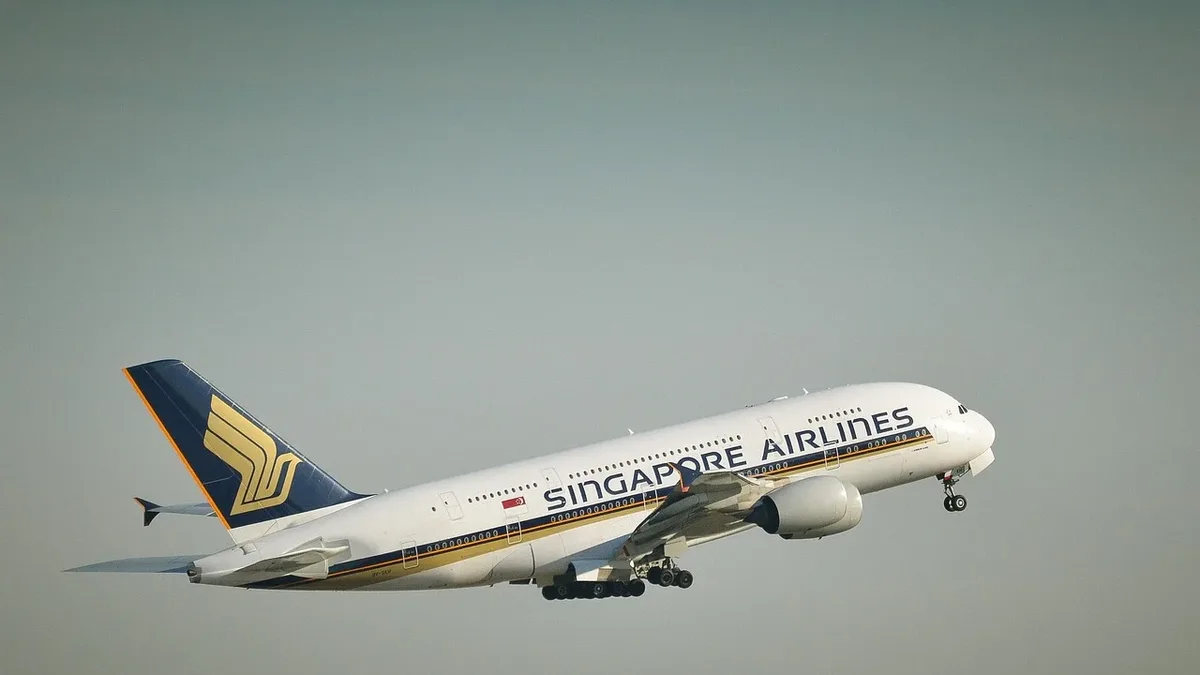
Singapore Airlines (SIA) is facing a request for a $1.5 billion capital injection into its struggling investment, Air India. The call for fresh equity comes from Air India's owners, Tata Sons, which holds a 74.9% stake, and SIA, which owns 25.1%.
Temasek, the Singapore state investment fund and SIA's majority shareholder, has publicly defended the long-term strategic rationale for the investment. However, it has not committed to backing any new capital contribution from SIA to meet the demand. Juliet Teo, Temasek's joint head of portfolio development, stated in a letter to The Business Times that efforts of this scale take time and are not expected to be linear.
Financial Strain and Political Pressure
Air India's financial situation is dire. For the fiscal year closed in March, Air India and its low-cost subsidiary Air India Express recorded combined losses of $2.33 billion. SIA's share of those losses was approximately $746 million. This contributed to a 57% drop in the Singapore-based group's net profit to $930 million.
Political pressure is mounting in Singapore against using public funds to support the Indian carrier. Opposition MP Kenneth Tiong of the Labour Party argued that no one, least of all Singaporeans, owes Air India a living. He has submitted an oral question for September 8 to the Transport Minister, Jeffrey Siow, asking if these losses affect SIA's ability to provide essential services.
SIA stated that its board will carefully consider any request for additional capital, weighing it against other group needs and Air India's strategy.
The Strategic Rationale and Challenges
SIA and Temasek justify the investment as a strategic entry into the world's third-largest aviation market, behind the United States and China. The plan is to use Air India as a secondary hub, with Indian air traffic projected to triple by 2044. SIA is the only foreign group with a direct stake in the Indian market following the merger of Vistara into Air India in November 2024.
Yet the turnaround faces severe headwinds. Tata, which regained control of Air India in 2022, has paused capital injections, leaving its total investment at $2.3 billion. N. Chandrasekaran, Chairman of Tata Sons, has said the recovery could take up to a decade. He will leave the chairman role in February 2027.
The transformation has been hit by external shocks: the closure of Pakistani airspace to Indian airlines, Middle East conflict disruptions, jet fuel price volatility, and the aftermath of a fatal Boeing 787 accident in 2025. CEO Campbell Wilson left his post in April of this year.
SIA's auditor has flagged indicators of impairment for the investment. The book value of SIA's stake has fallen sharply, and Air India's consolidated balance sheet has shown liabilities exceeding assets. Temasek reaffirmed the long-term thesis but faces internal resistance to funding the $1.5 billion request. The final decision now rests with the SIA board.