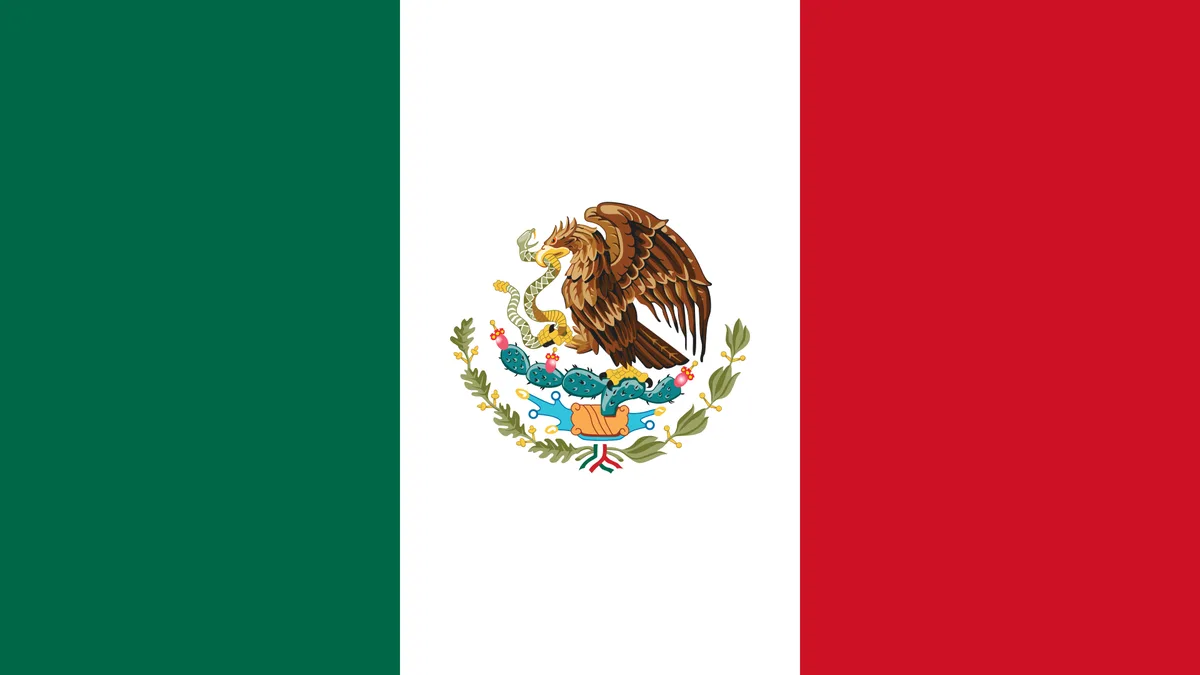
Mexico
| Official name | United Mexican States |
|---|---|
| Capital | Mexico City |
| Official language | Spanish |
| Currency | Mexican peso (MXN) |
| Time zone | Varies (UTC-5 to UTC-8) |
| Driving side | Right |
| Entry requirements | Vary by nationality (tourist card or visa often required) |
Origin and history
Mexico originates from the cultural and political developments within the region of Mesoamerica. The foundation of the modern nation-state was established following a prolonged war for independence from Spain, which concluded in the early 19th century. This followed over three centuries of colonial rule after the Spanish conquest of the Aztec Empire in the 16th century. The territory itself is built upon a long history of advanced indigenous civilizations, including the Olmec, Maya, Toltec, and Aztec, whose origins trace back millennia. The political entity known as the United Mexican States was formally constituted after independence, with its current federal republican system solidified after a revolution in the early 20th century. The nation's borders and internal structure have evolved through treaties, conflicts, and internal reforms since its founding.
What it is for
Mexico is a sovereign federal republic functioning as a nation-state for its population. Its governmental structure is designed to administer national defense, law, public services, and foreign policy across its territory. The country provides a framework for cultural expression, economic activity, and civic life for over 120 million inhabitants. It serves as a major global tourist destination due to its diverse landscapes, archaeological sites, and cultural heritage. Mexico functions as a significant manufacturing and trade economy, deeply integrated into North American supply chains through agreements like the USMCA. The nation also acts as a crucial geopolitical bridge between Latin America and the Anglo-dominated economies of North America.
Pros and cons
A primary advantage is the exceptional cultural and geographic diversity, offering everything from beaches and mountains to dense urban centers and ancient ruins. The cost of living and travel can be significantly lower than in neighboring countries to the north, making extended stays or retirement feasible for many. However, a common mistake is underestimating the vast internal distances and regional variations in safety, infrastructure, and climate. Travelers sometimes regret choosing only resort enclaves without experiencing the profound regional cultures, while others regret venturing into areas without researching current local security conditions. Economic disparities are pronounced, and bureaucratic processes can be slow and opaque for residents and businesses. Infrastructure quality, including roads and internet access, varies dramatically between major tourist corridors, cities, and rural areas.
Who it suits
Mexico suits budget-conscious travelers and digital nomads who can navigate different regions for long-term value. It appeals strongly to history and archaeology enthusiasts due to the density of pre-Columbian and colonial sites. The country is a match for retirees from North America seeking a warmer climate and lower living costs, particularly in established expatriate communities. It suits adventurous eaters and those interested in a deep, regional culinary tradition far beyond standardized tex-mex. Mexico is appropriate for business professionals engaged in international trade, manufacturing, or agriculture. It is less suited for those requiring consistent, ubiquitous English language service or who are uncomfortable with significant income inequality and a decentralized authority structure.
Latest Mexico news
Latest reporting

Cancún Hoteliers Oppose Sheinbaum's Non-Resident Fee Hike
Hotel leaders in Cancún warn that President Claudia Sheinbaum's planned increase to the Non-Resident Fee (DNR) will hurt Mexico's competitiveness.
Tourism Leaders Call for New Strategy to Boost Mexico
Industry leaders at a Skål Mexico meeting warn that inflation, poor air connectivity, and weak promotion are hurting Mexico's tourism competitiveness
Hyde Mexico City Reforma
Hyde Hotels opens in Mexico with 106 rooms

WTTC Urges Quintana Roo to Diversify Beyond Sun and Beach
The World Travel & Tourism Council says Mexico ranks fourth globally for leisure travel spending and calls for the state of Quintana Roo to expand air
Alaska Airlines adds Loreto, Mexico as 50th San Diego route
Alaska Airlines will begin seasonal direct flights from San Diego to Loreto, Mexico on December 19, marking its 50th destination from that city.

Riviera Maya Hotels Remodel 2,000 Rooms
Hotels in Mexico's Riviera Maya are renovating over 2,000 rooms ahead of the winter tourist season, supported by a global promotional campaign.