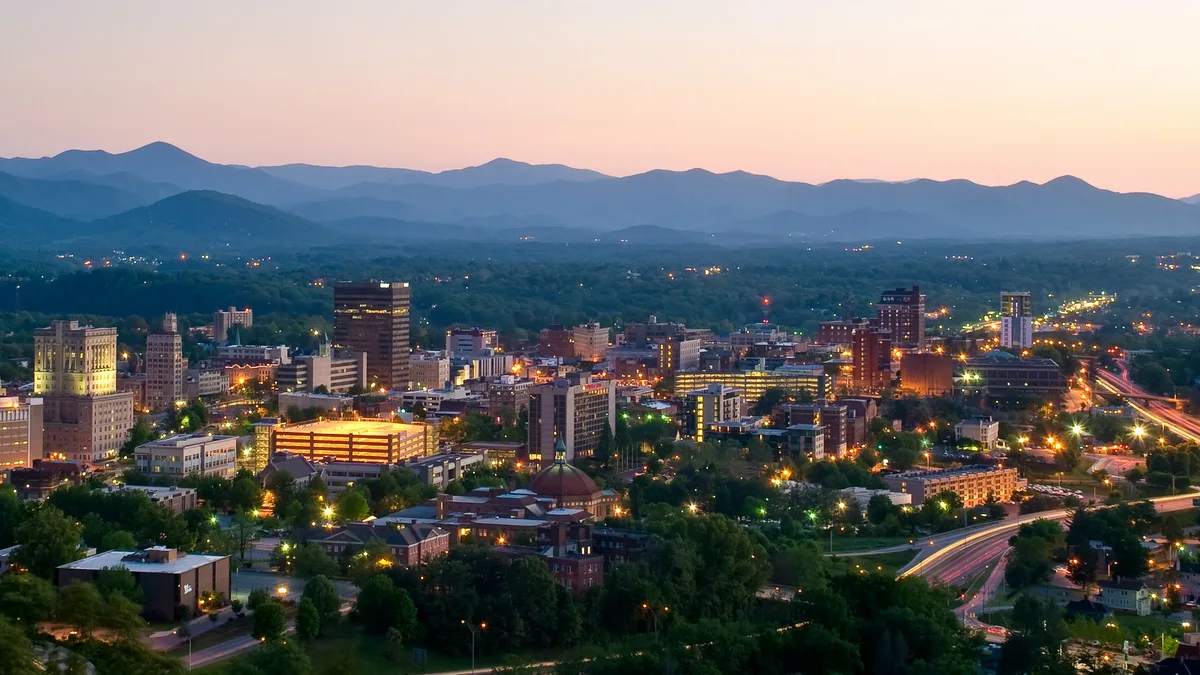
Asheville
| Country of origin | United States |
|---|---|
| First created | Late 18th century |
| Original use | Settlement and trading post |
| Getting there | By car via Interstate highways, by air via regional airport |
| Typical drive time from major hubs | 2 to 5 hours |
| Primary terrain | Blue Ridge Mountains |
| Climate | Humid subtropical with four distinct seasons |
| Notable for | Arts scene and historic architecture |
Origin and history
Asheville is a city located in the Blue Ridge Mountains of western North Carolina in the United States. Its modern history began in the late 18th century when settlers established a community at the confluence of the Swannanoa and French Broad rivers. The city was officially named Asheville in the 1790s after North Carolina Governor Samuel Ashe. Its development accelerated in the 1880s with the arrival of the Western North Carolina Railroad, which connected the remote mountain town to major markets. The late 19th and early 20th centuries saw Asheville become a resort destination for wealthy industrialists, leading to a construction boom of notable buildings like the Biltmore Estate, completed in the 1890s. The city faced significant economic hardship during the Great Depression but its architectural legacy from the boom era remains a core part of its identity today.
What it is for
Asheville functions as the primary economic and cultural hub for Western North Carolina. It serves as a regional center for healthcare, with several major hospital systems serving a multi-state area. The city has a longstanding purpose as a destination for tourism and outdoor recreation, leveraging its location within the Blue Ridge Mountains. It is also a noted center for arts and crafts, continuing the traditions of the surrounding Appalachian region through numerous galleries and studios. Furthermore, Asheville has developed a reputation as a culinary destination, with a high concentration of restaurants, breweries, and local food producers. The city also provides a residential base for a diverse population, including retirees, remote workers, and artists drawn to its landscape and culture.
Things to do in Asheville
Visitors can tour the Biltmore Estate, America's largest privately-owned home, which includes the historic house, extensive gardens, and a winery. Exploring the River Arts District allows for viewing working artists' studios and purchasing pottery, paintings, and textiles directly from creators. Driving the Blue Ridge Parkway, which runs just outside the city, offers access to countless hiking trails, waterfalls, and panoramic mountain overlooks. The downtown area features numerous art deco buildings, independent bookstores, and a vibrant street scene with live music often spilling out of venues. Visiting the Western North Carolina Nature Center provides an educational look at the native wildlife and ecosystems of the Appalachian region. Day trips to nearby hiking destinations like Mount Mitchell, the highest peak east of the Mississippi, or the scenic waterfalls in Pisgah National Forest are also popular activities.
What to do in Asheville
Spend a day at the Biltmore Estate, allocating time for the self-guided house tour, a walk through the formal gardens, and a tasting at the on-site winery. Dedicate several hours to wandering the River Arts District, entering open studios to watch artists work and discuss their craft. Drive a section of the Blue Ridge Parkway, stopping at designated overlooks like Craggy Gardens for short walks and photography. Explore downtown Asheville on foot to appreciate its architecture, visit local shops, and sample craft beer from one of the many breweries. Arrange a guided outdoor activity such as a whitewater rafting trip on the French Broad River or a mountain biking excursion on forest service roads. Attend a performance or concert at venues like the Orange Peel, Thomas Wolfe Auditorium, or one of the smaller music halls to experience the local arts scene.
Best time to visit Asheville
The autumn months, particularly from late September through October, are highly popular due to the spectacular display of fall foliage in the surrounding mountains. Spring, from April to early June, offers mild temperatures, blooming wildflowers along the Blue Ridge Parkway, and fewer crowds than the fall peak. Summer brings warmer weather suitable for river activities and higher elevation hikes, though afternoon thunderstorms are common and accommodation prices are at their peak. Winter is the quietest season, with colder temperatures offering a chance to see the Biltmore Estate decorated for Christmas and potential for snow in the higher elevations. Early November and late March often provide a balance of decent weather and reduced visitor numbers, though some seasonal attractions may have limited hours. Regardless of season, visitors should prepare for variable mountain weather, with temperature shifts of twenty degrees or more between the city and nearby mountain peaks.
Asheville itinerary
A three-day itinerary could begin with a full day dedicated to the Biltmore Estate, including its house, gardens, and Antler Hill Village. On the second day, explore downtown Asheville in the morning, visiting historic sites like the Basilica of Saint Lawrence and browsing local shops, followed by an afternoon in the River Arts District. Dedicate the third day to the natural surroundings, driving a portion of the Blue Ridge Parkway, hiking to a waterfall like Linville Falls, and enjoying a dinner featuring local Appalachian cuisine. A five-day visit allows for a more relaxed pace, adding a day for a guided outdoor activity such as rafting or a zip-line tour, and another day for a visit to the nearby town of Black Mountain or a longer hike in Pisgah National Forest. All itineraries should account for travel times on winding mountain roads, which are often longer than mileage suggests. Reservations for popular restaurants and specific Biltmore Estate entry times are strongly recommended, especially during peak seasons.
Pros and cons
A significant pro is the exceptional access to both vibrant city amenities and extensive outdoor recreation within a short drive. The cons include traffic congestion, particularly on primary routes like Interstate 26 and Tunnel Road, which can be severe during peak tourist seasons and weekend arrivals. The city's popularity has led to a high cost of living and visiting, with hotel rates and restaurant prices often matching or exceeding those of larger metropolitan areas. A common mistake is underestimating the logistical challenge of a visit, failing to secure necessary reservations for major attractions and popular dining spots months in advance. Visitors who regret choosing Asheville are often those seeking a secluded, rustic mountain retreat, as the downtown core is decidedly urban and can be crowded. The weather can also be a con, as the mountain location leads to unpredictable conditions, with rain frequently disrupting outdoor plans regardless of the forecast.
Who it suits
Asheville suits outdoor enthusiasts who want a comfortable base camp for daily hikes, bike rides, or river trips without sacrificing evening dining and entertainment options. It is ideal for food and drink connoisseurs interested in exploring a concentrated craft beer scene, farm-to-table restaurants, and culinary tours. The city appeals to arts and crafts aficionados who enjoy seeing creators at work and purchasing handmade goods directly from studios. It is a good match for history and architecture buffs, particularly those interested in the Gilded Age, as exemplified by the Biltmore, and well-preserved art deco downtown buildings. Asheville also suits retirees and remote workers seeking a scenic small city with a temperate climate and a strong sense of community, though they must be prepared for the associated costs. It is less suited for budget travelers, those seeking a nightlife-focused urban experience, or visitors who prefer flat, easily navigable terrain.