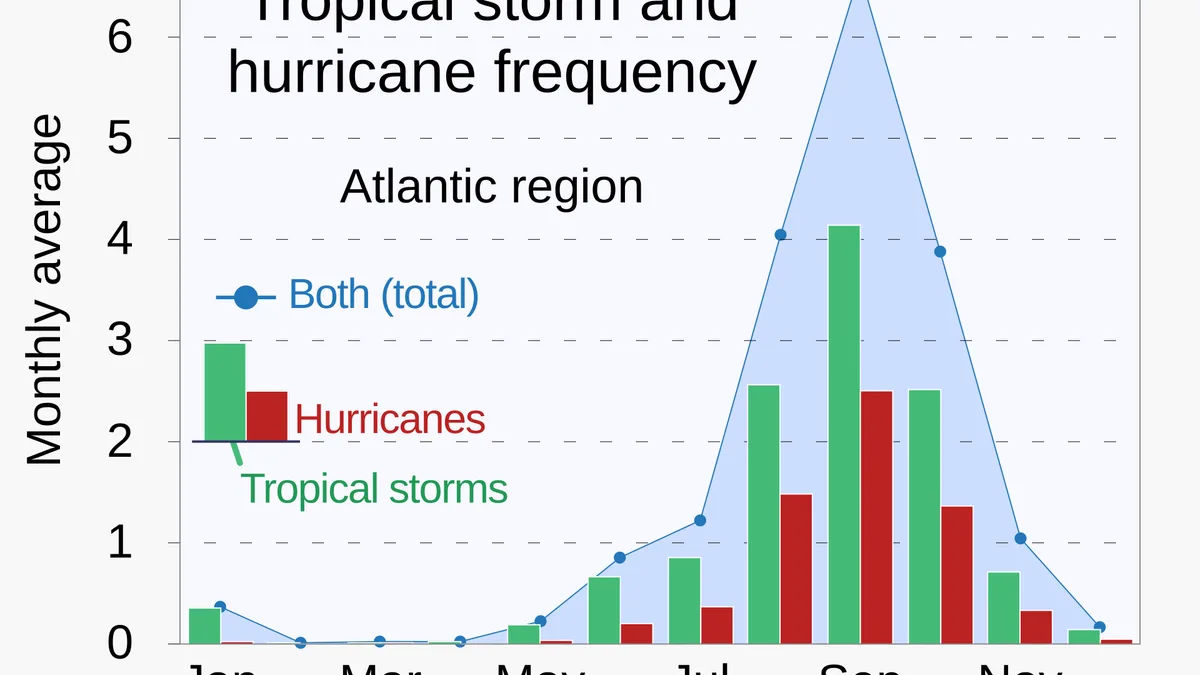
Atlantic Hurricane Season
| Season start | June 1 |
|---|---|
| Season end | November 30 |
| Peak activity period | Mid-August to late October |
| Typical formation zones | Atlantic Ocean, Caribbean Sea, Gulf of Mexico |
| Primary hazards | High winds, storm surge, heavy rainfall |
| Monitoring authority | National Hurricane Center (NHC) |
| Preparedness actions | Evacuation planning, securing property, emergency supplies |
Origin and history
The Atlantic Hurricane Season is a climatic pattern originating from the Atlantic Ocean basin, encompassing the North Atlantic Ocean, Caribbean Sea, and Gulf of Mexico. Its cyclical nature has been documented for centuries, with indigenous populations in the Caribbean and early European colonists noting periods of intense storms. Systematic scientific observation and tracking began in the 19th century with the advent of ship logs and early weather stations. The formal definition of a June-through-November season was established by the mid-20th century as meteorological understanding and data collection improved. This pattern is not a human creation but a natural, recurring phenomenon driven by oceanic and atmospheric conditions. Its historical record is pieced together from shipwrecks, colonial records, and later, dedicated governmental meteorological observation.
What it is for
The Atlantic Hurricane Season is the annually recurring period when conditions are most favorable for the formation of tropical cyclones in the Atlantic basin. Its primary function, from a systems perspective, is to redistribute heat energy from the tropics toward the poles, playing a critical role in Earth's global climate regulation. The season defines a temporal framework used by meteorological agencies, governments, and emergency managers to prepare public awareness and coordinate response protocols. It sets the official timeframe for the routine issuance of tropical weather outlooks and forecasts by bodies like the National Hurricane Center. For coastal residents and industries, the season dictates annual cycles of preparedness activities, including property fortification and supply stocking. The defined season also structures insurance policy periods, agricultural planning, and maritime shipping schedules across the affected regions.
Pros and cons
A primary pro of the seasonal structure is that it provides a predictable, focused period for public education and systemic preparedness, increasing community resilience. The concentrated forecasting effort during these months leads to high-accuracy track and intensity predictions, giving populations critical lead time for evacuation. Conversely, a significant con is the potential for complacency outside the official dates, as early or late-season storms can and do occur, catching some communities unprepared. A common mistake is relying solely on a storm's category, underestimating the devastating inland flooding from rainfall or storm surge associated with weaker systems. Many who regret their choices are those who ignore mandatory evacuation orders for reasons of property security or storm fatigue, often putting themselves and first responders at extreme risk. The economic con is severe, as even storms that do not make landfall can disrupt shipping and energy production, causing supply chain delays and volatility in commodity prices.
Who it suits
This seasonal pattern inherently suits meteorologists and climate scientists, for whom it provides a defined period of intensive study and data collection on cyclone behavior. It suits emergency management professionals and local governments by providing a cyclical operational timeline for drills, resource allocation, and public messaging campaigns. The seasonal framework suits insurance and construction industries, which adjust their models, policies, and workload around the predictable peak of physical risk. It does not suit complacent coastal residents or those new to hurricane-prone regions who fail to undertake annual preparedness. The season particularly suits individuals with flexible remote work arrangements and the financial means to evacuate early, avoiding last-minute travel chaos. Ultimately, it best suits those who approach it with respect, understanding it as a recurring natural schedule requiring definitive personal and community action.
Latest Atlantic Hurricane Season news
Latest reporting

LATAM adds flights, new destinations for Brazil summer
LATAM will increase domestic frequencies in Brazil by 13% for the 2026/2027 summer season, adding 52 weekly flights.

Canada-Dominican Republic flights to jump 39% for winter
AERODOM, the airport operator, will increase seat capacity from Canada to the Dominican Republic by 39% for the 2026-2027 winter season.

Argentine tourists flock to Curaçao for hurricane-free
Curaçao reports record Argentine arrivals, driven by direct flights and natural advantages like no hurricanes or sargassum.

Tulum Tourism Leader Blames Sargassum, World
The vice president of tourism for Tulum's chamber of commerce says the high season was not prosperous, with hotel occupancy reaching only 60-70%...

Riviera Maya Hotels Remodel 2,000 Rooms
Hotels in Mexico's Riviera Maya are renovating over 2,000 rooms ahead of the winter tourist season, supported by a global promotional campaign.

Air France Introduces La Première Cabin on Paris-San Francisco Flights
Air France has launched its new La Première cabin on daily flights between Paris and San Francisco. The experience is available on selected Boeing...