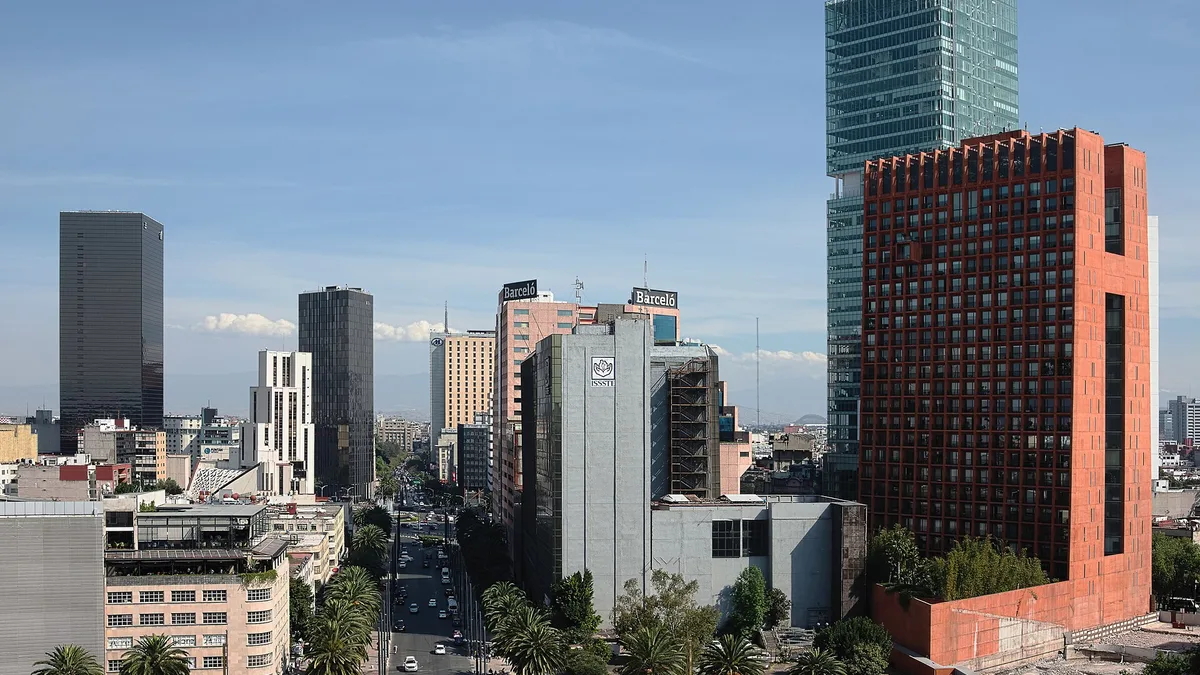
Mexico Ciudad De Mexico
| Country of origin | Mexico |
|---|---|
| First created | Founded as Tenochtitlan in 1325 CE, refounded as Mexico City in 1521 CE |
| Original use | Capital of the Aztec Empire, then capital of New Spain |
| Getting there | Served by Mexico City International Airport (MEX) and Felipe Ángeles International Airport (NLU) |
| Time to airport | Typically 30 to 90 minutes from the city center, depending on traffic |
| Primary transport | Metro, Metrobús, taxis, and ride-sharing services |
| Climate | Subtropical highland, with a dry season and a rainy season |
| Elevation | Approximately 2,250 meters (7,380 feet) above sea level |
Origin and history
Mexico Ciudad De Mexico, commonly referred to as Mexico City, originates from the heart of the modern-day nation of Mexico. Its history begins long before Spanish contact, with the rise of the Mexica (Aztec) civilization in the 14th century. The Mexica founded their capital, Tenochtitlan, on an island in Lake Texcoco around 1325, establishing a major urban and ceremonial center. This city was systematically destroyed by Spanish conquistadors led by Hernán Cortés in the early 16th century, culminating in its fall in 1521. Following the conquest, the Spanish rebuilt the city directly atop the ruins of Tenochtitlan, establishing the capital of the Viceroyalty of New Spain. This layered history of indigenous and colonial foundations makes it one of the oldest continuously inhabited urban areas in the Americas.
What it is for
Mexico City functions as the capital and primary political center of the United Mexican States, housing all federal branches of government. It is the country's dominant economic and financial hub, hosting the headquarters of national corporations and major international banks. The city serves as the central node for national transportation networks, including the busiest airport in Latin America and major railway and highway junctions. It is a preeminent cultural and educational center, containing the nation's most significant museums, universities, and historical archives. Furthermore, it acts as a critical base for media and communications, producing a substantial portion of the country's broadcast and print media. Its role extends to being a major destination for both domestic and international tourism, drawing visitors to its historic center, archaeological sites, and contemporary arts scene.
Pros and cons
A primary advantage of Mexico City is its immense cultural and historical depth, offering unparalleled access to pre-Columbian ruins, colonial architecture, and world-class museums often at low entry costs. The city's extensive and inexpensive public metro and bus network provides remarkable mobility across its vast urban area. Its status as an economic center creates significant professional and educational opportunities across numerous industries. A major con is its severe air pollution, particularly during the dry season, which can pose serious health risks and diminish quality of life. Intense traffic congestion is a daily reality, wasting hours for commuters and contributing to stress and pollution. The sheer scale and population density of the city can be overwhelming, leading to feelings of anonymity and, in certain areas, higher incidences of petty crime that require constant vigilance. Visitors and residents alike often regret underestimating the physical and logistical demands of navigating a metropolis of such size and complexity.
Who it suits
Mexico City suits historians, archaeologists, and art enthusiasts who wish to immerse themselves in layers of Mesoamerican and colonial history. It is ideal for career-driven professionals in fields like finance, diplomacy, media, and the arts seeking the concentration of opportunities a primate city provides. Budget-conscious travelers and digital nomads can find it accommodating due to its relatively low costs for accommodation, food, and transport compared to other global capitals. The city appeals to those who thrive in a constant, energetic urban environment with 24-hour amenities and a vibrant street life. It is less suited for individuals with respiratory conditions due to air quality issues, or for those who prefer a quiet, slow-paced, or nature-centric lifestyle. People who are uncomfortable with navigating crowded spaces, complex transit systems, or who require a high degree of personal space often find the city challenging.
Latest Mexico Ciudad De Mexico news
Latest reporting
Cancún Hoteliers Oppose Sheinbaum's Non-Resident Fee Hike
Hotel leaders in Cancún warn that President Claudia Sheinbaum's planned increase to the Non-Resident Fee (DNR) will hurt Mexico's competitiveness.
Tourism Leaders Call for New Strategy to Boost Mexico
Industry leaders at a Skål Mexico meeting warn that inflation, poor air connectivity, and weak promotion are hurting Mexico's tourism competitiveness
Hyde Mexico City Reforma
Hyde Hotels opens in Mexico with 106 rooms

WTTC Urges Quintana Roo to Diversify Beyond Sun and Beach
The World Travel & Tourism Council says Mexico ranks fourth globally for leisure travel spending and calls for the state of Quintana Roo to expand air
Alaska Airlines adds Loreto, Mexico as 50th San Diego route
Alaska Airlines will begin seasonal direct flights from San Diego to Loreto, Mexico on December 19, marking its 50th destination from that city.
Riviera Maya Hotels Remodel 2,000 Rooms
Hotels in Mexico's Riviera Maya are renovating over 2,000 rooms ahead of the winter tourist season, supported by a global promotional campaign.