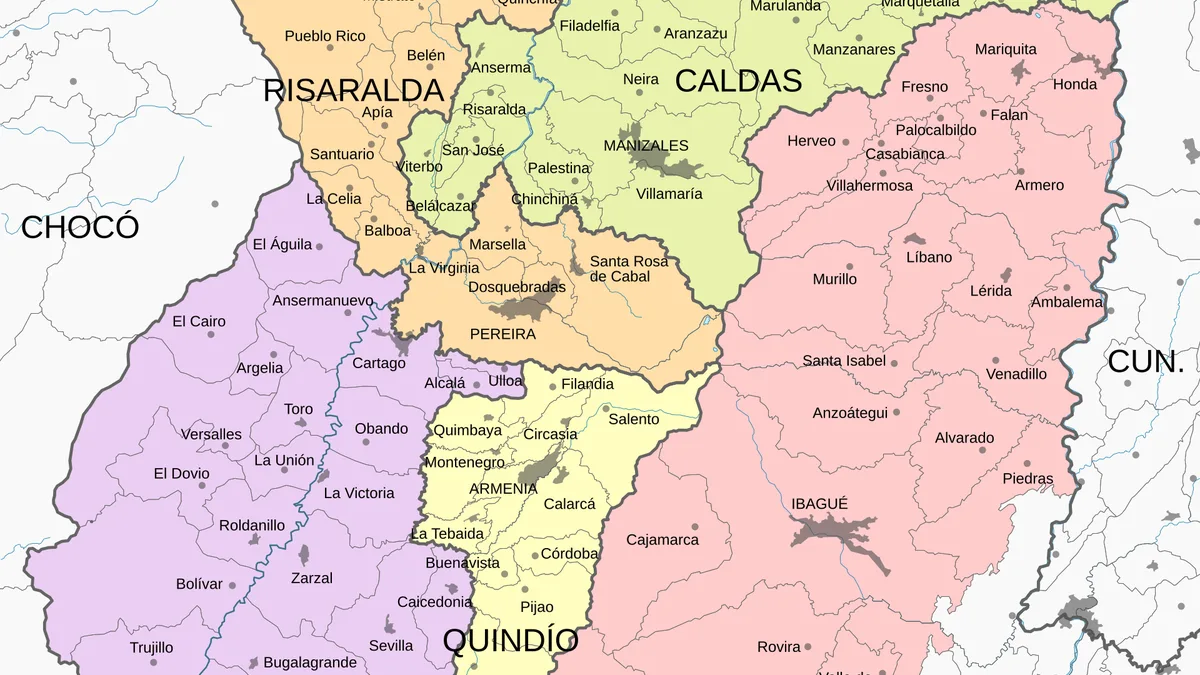
Colombia Coffee Region
| Primary city | Armenia, Pereira, Manizales |
|---|---|
| Country | Colombia |
| Closest major airport | MDE (José María Córdova, Medellín) / PEI (Matecaña, Pereira) |
| Flight time from Miami | 3–4 hours (to MDE) |
| Best time to visit | Dry seasons (Dec–Mar, Jun–Sep) |
| Main attraction | Coffee farm tours (fincas) |
| Terrain | Andean mountains, valleys |
Origin and history
The Colombia Coffee Region, known locally as the Eje Cafetero or Coffee Triangle, is a geographical and cultural region located within the country of Colombia in South America. Its origin as a defined cultural landscape is intrinsically linked to the cultivation of coffee, which began in the early 19th century. Jesuit priests are credited with introducing coffee seeds to the region in the first decades of the 1800s, with significant cultivation for export developing from the mid-1800s onward. The region's identity was forged through the late 19th and early 20th centuries as colonizers, primarily from the Antioquia region, settled the slopes of the Central and Western Andes ranges. This period saw the establishment of the characteristic smallholder farms, or *fincas*, that define its agricultural structure. The cultural heritage of the area, including its architecture, music, and traditions, coalesced around the rhythms and demands of coffee production over this century-long period. It was formally recognized as a UNESCO World Heritage site, designated as the "Coffee Cultural Landscape of Colombia," in 2011, cementing its status based on this historical development.
What it is for
The Colombia Coffee Region is primarily a working agricultural zone dedicated to the cultivation, processing, and export of high-quality Arabica coffee beans. It functions as the heart of Colombia's coffee industry, which is a cornerstone of the national economy and a key global supplier. The region is also a major destination for cultural and agritourism, where visitors tour active coffee farms to learn about the entire production process from seed to cup. It serves as a living museum of a specific cultural adaptation to mountainous terrain, showcasing traditional farming techniques, vernacular architecture like the *bahareque* houses, and community life shaped by coffee. The region's infrastructure, including the network of towns like Manizales, Armenia, and Pereira, supports both the logistical needs of coffee commerce and the hospitality requirements of tourism. Furthermore, it acts as a conservation area for significant biodiversity within the Andean ecosystem, where shade-grown coffee practices contribute to environmental sustainability.
Pros and cons
A primary advantage of visiting the Colombia Coffee Region is the immersive, authentic experience of a working agricultural landscape, offering deeper educational value than a typical resort vacation. The scenery of verdant, rolling hills dotted with coffee bushes and wax palms is consistently cited as spectacular and uniquely picturesque. The cost of travel, accommodation, and meals within the region itself is generally moderate, providing good value, especially outside major cities. A significant con is the relative difficulty and expense of initial travel, as reaching the region requires a domestic flight from an international gateway like Bogotá or Medellín, adding time and cost to an itinerary. The infrastructure, while adequate, can involve lengthy, winding road journeys between towns and farms, which may challenge those prone to motion sickness or those expecting seamless transit. Common regrets often stem from underestimating the terrain; the activities, including farm tours, involve walking on steep, often muddy paths unsuitable for those with limited mobility. A frequent mistake is allocating insufficient time, treating it as a brief stopover rather than a multi-day destination to fully engage with the slow-paced, rural rhythm of life.
Who it suits
This destination suits travelers with a genuine interest in agriculture, botany, or the origins of everyday commodities, who enjoy educational tours and hands-on learning experiences. It is ideal for scenic landscape photographers and nature lovers who appreciate temperate mountain climates, birdwatching, and panoramic views over cultivated valleys. The region appeals to cultural tourists seeking authentic interactions with local farming communities and a desire to understand Colombia's heritage beyond its major cities. It is a good match for budget-conscious travelers who are comfortable with modest, family-run lodgings and local transportation options like shared jeeps or buses. The destination is suitable for those who prefer a relaxed pace and are comfortable with a degree of physical activity, including walking on uneven ground in a sometimes rainy environment. It is less suited for travelers seeking nightlife, beach relaxation, or urban amenities, or for those requiring guaranteed wheelchair accessibility throughout their itinerary.
Latest Colombia Coffee Region news
Latest reporting
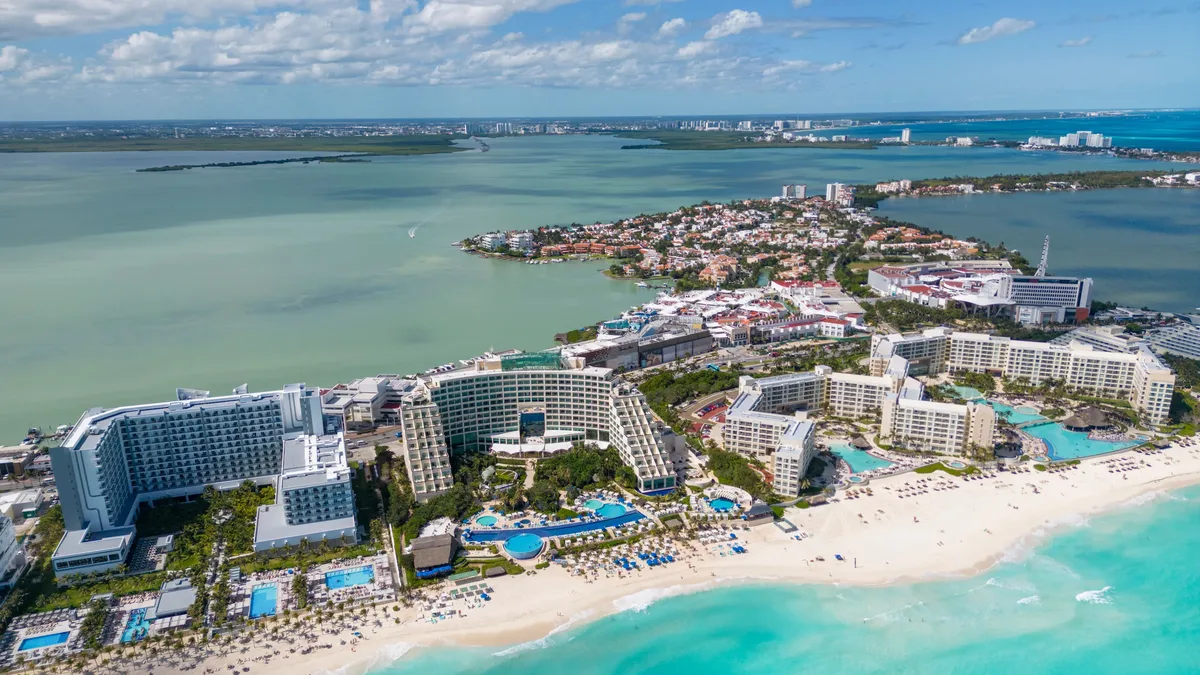
Mexican Caribbean Hoteliers Detail Government's Role
Hoteliers in Quintana Roo have formally presented state and federal officials with a list of government actions they blame for the region's tourism

SATENA loyalty program offers free flight on 44 routes
Colombia's SATENA airline launched a loyalty program. Passengers completing ten flights by December 15 can redeem a domestic one-way ticket.
Colombia-Israel visa waiver begins Sept 1
Colombians can visit Israel visa-free from September 1 but must obtain a new Electronic Travel Authorization (ETA-IL), costing about 25,000 pesos.

Patagonia Summer Deals: Affordable Flights to Argentina and Chile
Explore the beautiful Patagonia region in Argentina and Chile during the summer months with affordable flight deals starting from R$ 1,966 return.