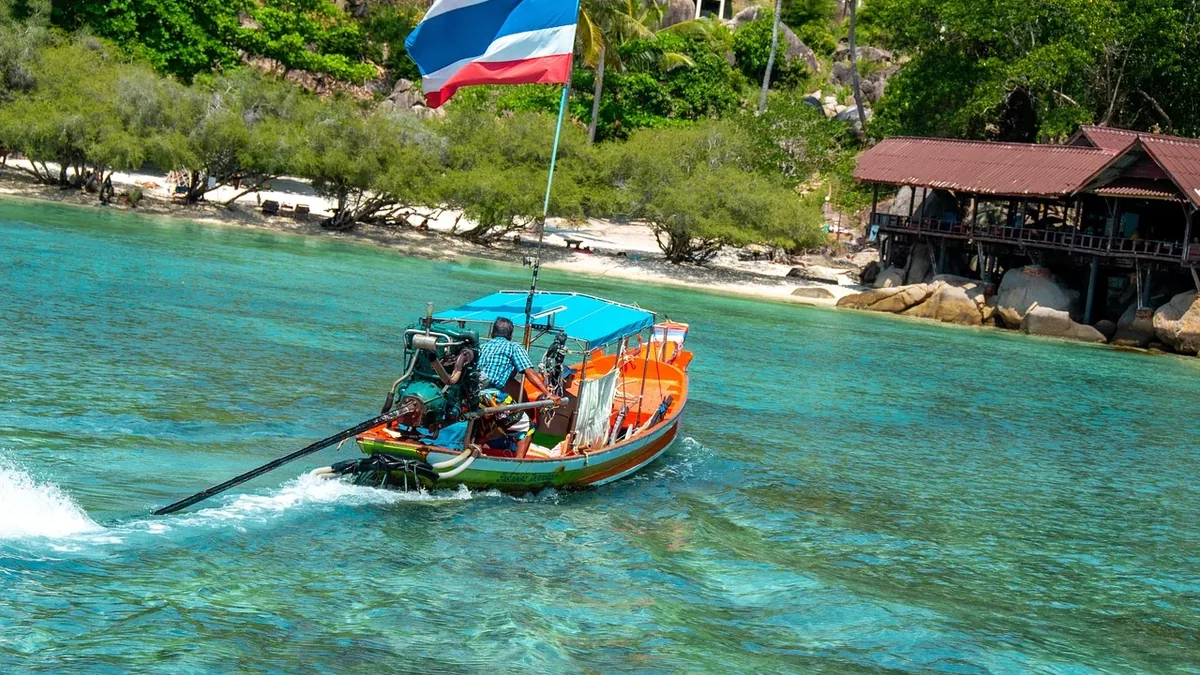
Tailandia
| Official name | Kingdom of Thailand |
|---|---|
| Capital | Bangkok |
| Primary international airport | Suvarnabhumi Airport (BKK) |
| Visa policy for tourism | Visa on arrival or visa-free for many nationalities |
| Currency | Thai Baht (THB) |
| Common languages | Thai |
| Climate | Tropical; hot and humid with distinct wet and dry seasons |
Overview
Tailandia is the Spanish and Italian name for the Kingdom of Thailand, a constitutional monarchy in Southeast Asia. It is bordered by Myanmar, Laos, Cambodia, and Malaysia, with coastlines along the Andaman Sea and the Gulf of Thailand. The country is known for its diverse geography, which includes mountainous northern regions, fertile central plains, and tropical southern peninsulas. Its capital and largest city is Bangkok, a major global hub for commerce, culture, and tourism. The nation's culture is deeply influenced by Theravada Buddhism, which is evident in its thousands of ornate temples and daily social rituals. The official language is Thai, and the currency is the Thai baht.
History
The area now known as Thailand has been inhabited for thousands of years, with major historical kingdoms including the Sukhothai and Ayutthaya empires. The modern nation-state originated from the kingdom of Siam, which consolidated power in the region from the 13th century onward. The country avoided formal European colonization during the 19th century, maintaining its sovereignty through diplomatic maneuvering. In 1939, the kingdom's name was officially changed to Thailand, a change that has reverted and been reinstated at points in its modern history. The 20th century saw the country transition from an absolute monarchy to a constitutional monarchy in 1932, followed by periods of political instability and military rule. Its unique historical position as the only Southeast Asian nation never colonized by a European power is a central point of national identity.
How it works today
Thailand operates as a constitutional monarchy with a parliamentary government, though the military remains a powerful political institution. The King serves as the head of state and a symbol of national unity, while the Prime Minister is the head of government. The economy is highly diversified, with significant sectors including tourism, manufacturing, agriculture, and exports of electronics, automotive parts, and agricultural products. Bangkok functions as the overwhelming political, economic, and cultural center, though regional cities like Chiang Mai and Phuket are important in their own right. The country's infrastructure is generally well-developed for tourism, with extensive domestic flight networks, railways, and bus services connecting major destinations. Daily life for its approximately 70 million citizens varies greatly between the developed urban centers and the more traditional rural communities.
Pros and cons
A major advantage of visiting Thailand is its exceptional value for money, offering high-quality accommodation, food, and services at relatively low cost compared to many Western destinations. The country's tourism infrastructure is mature and widespread, making independent travel straightforward even for first-time visitors to Asia. A significant drawback is the severe traffic congestion and pollution in Bangkok and other large cities, which can drastically impact travel time and comfort. Many tourists regret over-ambitious itineraries that involve too much internal travel, underestimating the distances and time required to move between regions like the north and the southern islands. The common mistake is confining a visit solely to crowded tourist hotspots, missing the nuanced culture and quieter landscapes available in less-visited provinces. Political stability can be uncertain, with periodic protests or military interventions that rarely affect tourists directly but can cause concern.
Who it suits
Thailand suits budget-conscious travelers and luxury seekers alike, as its accommodation and dining spectrum is exceptionally broad. It is ideal for first-time travelers to Asia due to its developed tourist trails, general friendliness, and abundance of English-language information. The country appeals strongly to food enthusiasts, offering a world-renowned street food culture and distinct regional cuisines from fiery northeastern dishes to coconut-rich southern curries. It is a prime destination for beach and island holidaymakers, scuba divers, and those seeking wellness retreats and spa treatments. Adventure travelers find it suitable for trekking in northern hill tribe areas, rock climbing, and exploring national parks. Conversely, it may not suit those seeking a pristine, untouched environment, as many popular beaches and sites show signs of overtourism and environmental strain.