Peru
| Capital | Lima |
|---|---|
| Official languages | Spanish, Quechua, Aymara |
| Currency | Peruvian Sol (PEN) |
| Time zone | Peru Time (PET, UTC-5) |
| Visa requirements | Varies by nationality |
| Entry points | Jorge Chávez International Airport (LIM), land borders |
| Climate | Varies from tropical coast to Andean highlands to Amazon rainforest |
| Terrain | Coastal plain, Andes mountains, Amazon basin |
Overview
Peru is a sovereign nation located on the western coast of South America, bordered by Ecuador, Colombia, Brazil, Bolivia, Chile, and the Pacific Ocean. Its territory encompasses a dramatic and geographically diverse landscape divided into three primary regions: the arid coastal plain, the high Andes mountains, and the Amazon rainforest basin. The country operates as a unitary presidential republic with its capital in Lima, which is also its largest city and primary economic hub. Peru's economy is considered an upper-middle-income economy, heavily reliant on exports of minerals, agricultural products, and fishmeal. The official languages are Spanish, Quechua, and Aymara, reflecting its complex cultural heritage. Its population exceeds 33 million people, with a significant proportion residing in urban areas along the coast.
History
Human habitation in the territory of modern Peru dates back millennia, with the Norte Chico civilization along the coast being one of the oldest known complex societies in the Americas, emerging in the fourth millennium BCE. The region was later the center of several major pre-Columbian empires, most notably the Inca Empire, which established its capital at Cusco in the Peruvian highlands and expanded to become the largest empire in pre-Columbian America during the 15th century. Spanish conquistadors led by Francisco Pizarro arrived in the early 16th century, capturing the Inca emperor and establishing the Viceroyalty of Peru, which became a principal source of Spanish wealth and power for centuries. Peru declared its independence from Spain in 1821, with independence solidified after the battles of Junín and Ayacucho in 1824. The 19th and 20th centuries were marked by political instability, territorial disputes, military rule, and periods of economic crisis. The late 20th century saw a violent internal conflict with Maoist insurgent groups and the establishment of a more stable democratic framework in the 2000s.
How it works today
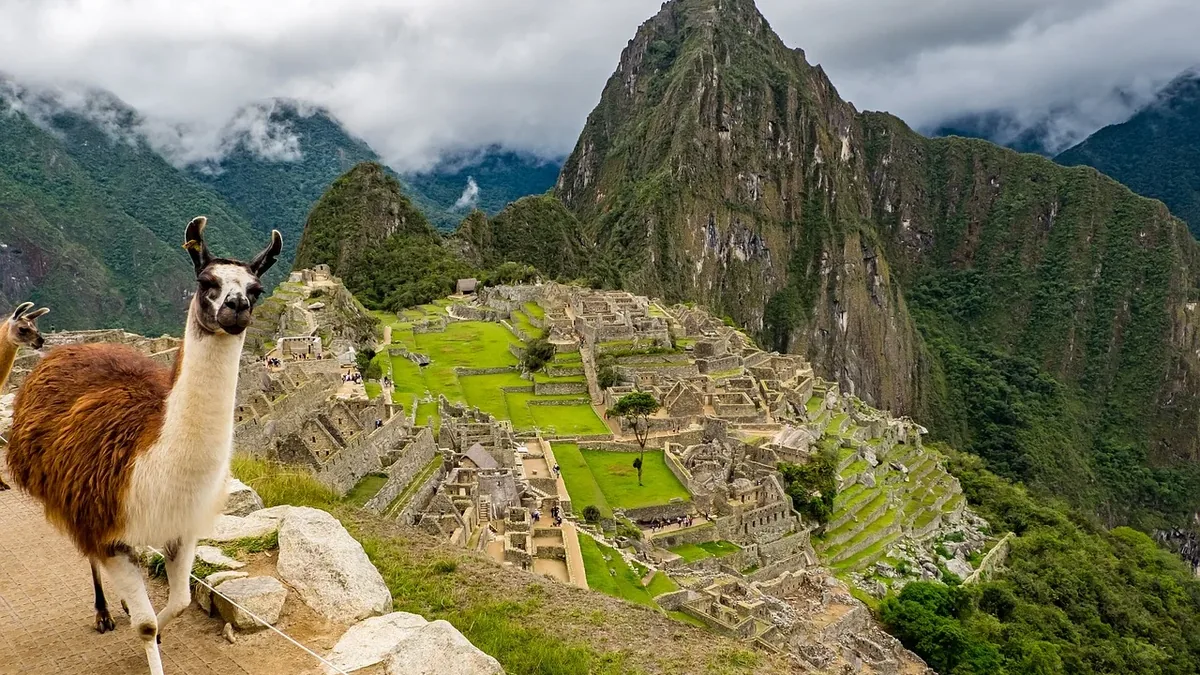
Peru functions as a constitutional republic with a multi-party political system and a separation of powers among the executive, legislative, and judicial branches. The President serves as both head of state and head of government, elected for a five-year term without immediate re-election. The unicameral Congress holds legislative power, and the judiciary is headed by the Supreme Court. Administratively, the country is divided into 25 regions, including the Lima Province which is not part of any regional government. The economy is market-oriented with strong mining, agriculture, fishing, and manufacturing sectors, and it has established numerous free trade agreements globally. Tourism is a significant and growing industry, centered on major attractions like Machu Picchu, the Nazca Lines, and the Amazon rainforest. The state faces ongoing challenges related to infrastructure development, informal employment, political corruption, and providing uniform public services across its difficult geography.
Pros and cons
A primary advantage of visiting or engaging with Peru is its unparalleled archaeological and natural diversity, offering experiences from ancient ruins to biodiverse rainforests within a single country. The cost of travel and living, outside of packaged luxury tours, remains relatively moderate compared to many Western destinations, with affordable local transportation, food, and lodging. However, a significant con is the persistent infrastructure gap, where road conditions, public transportation reliability, and internet connectivity can be poor outside major urban centers, complicating travel plans. Many visitors regret underestimating the physical demands and necessary acclimatization time for high-altitude destinations like Cusco and Lake Titicaca, which can lead to severe altitude sickness. A common mistake is attempting an overly ambitious itinerary that involves frequent long-distance bus travel on winding mountain roads, leading to exhaustion rather than enjoyment. Furthermore, petty theft and scams targeting tourists in crowded markets, bus stations, and certain city districts are a genuine concern that requires constant vigilance.
Who it suits
Peru suits adventurous travelers and trekkers who are physically prepared for demanding hikes, such as the Inca Trail, and who are flexible with changing conditions and schedules. It appeals strongly to history enthusiasts and archaeology buffs eager to explore pre-Columbian sites that are integral to understanding early American civilizations. Budget-conscious backpackers and slow travelers find it accommodating due to the wide availability of hostels, inexpensive local eateries, and extensive bus networks connecting the country. The destination is also suitable for nature and wildlife watchers, particularly those interested in Amazonian ecology, birding, and unique coastal and mountain ecosystems. It is less suited for travelers seeking predictable, resort-style luxury outside of a few specific enclaves or for those with significant mobility issues, given the prevalence of uneven terrain and steep stairs at major sites. Business professionals and investors may find opportunities in its developing economy but must navigate a bureaucratic environment that can be opaque and time-consuming.