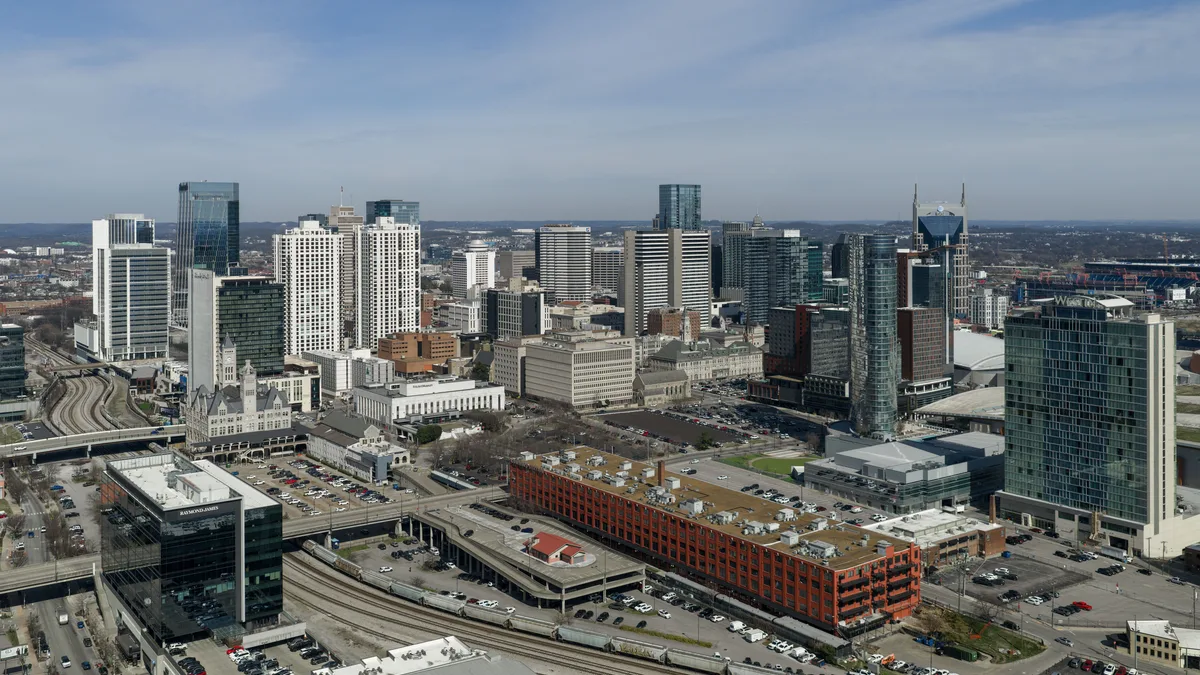
Things To Do In Nashville
| Geographic region | Tennessee |
|---|---|
| State | Tennessee |
| Original use | Established as a river trading post |
| Typical weather | Hot, humid summers; mild winters |
| Airport code | BNA |
| Getting there by car | Major interstate hub (I-40, I-24, I-65) |
| Time zone | Central Time (CT) |
Origin and history
Nashville is a major city located in the southeastern United States, within the state of Tennessee. It was founded in 1779 as a fort and settlement on the banks of the Cumberland River by a group of settlers led by James Robertson. Throughout the 19th century, Nashville grew as a river trade and transportation hub, later becoming the permanent capital of Tennessee in 1843. Its strategic location made it a crucial center during the American Civil War, where it was the site of a significant battle in late 1864. The city's modern identity began to solidify in the early 20th century with the establishment of its music publishing and recording industries.
What it is for
Nashville functions as the capital city of Tennessee and the seat of Davidson County, serving as the center of state government and politics. It is a major hub for higher education and healthcare, hosting numerous universities and a large medical industry often referred to as "Healthcare Gulch." The city is globally recognized as the epicenter of the country music industry, housing the headquarters of major record labels, publishing companies, and performance rights organizations. It acts as a primary transportation and logistics nexus for the Middle Tennessee region, supported by its interstate highway system, international airport, and inland river port. Furthermore, Nashville is a significant destination for conventions and tourism, driven by its cultural offerings and entertainment infrastructure. The city's economy is diversified, with substantial sectors in finance, insurance, and automotive manufacturing.
Things to do in Things To Do In Nashville
Visitors can explore the Country Music Hall of Fame and Museum, which houses an extensive collection of artifacts, recordings, and memorabilia documenting the history of country music. A tour of RCA Studio B provides a historical look at the recording studio where legends like Elvis Presley and Dolly Parton recorded numerous hits. The Grand Ole Opry, the world's longest-running radio broadcast, offers live performances and backstage tours at its dedicated theater complex. The Parthenon in Centennial Park is a full-scale replica of the Athenian original and contains an art museum. The Johnny Cash Museum offers a comprehensive collection dedicated to the life and career of the Man in Black. The National Museum of African American Music educates visitors on the history and influence of African American musicians across multiple genres.
What to do in Things To Do In Nashville
Attend a live show at one of the many honky-tonk bars on Lower Broadway, where music is performed daily from afternoon until late night. Visit the Ryman Auditorium, the historic former home of the Grand Ole Opry known for its exceptional acoustics and architectural significance. Explore the Belle Meade Historic Site and Winery, a former thoroughbred horse plantation that illustrates antebellum Southern history. Walk or bike across the John Seigenthaler Pedestrian Bridge for panoramic views of the downtown skyline and the Cumberland River. Spend time in the Gulch neighborhood, known for its street art, including the famous "What Lifts You" wings mural, and its concentration of restaurants and shops. Tour the Tennessee State Capitol building, a National Historic Landmark designed by architect William Strickland and completed in the 1850s.
Things To Do In Nashville itinerary
A typical three-day itinerary might begin with a morning visit to the Country Music Hall of Fame, followed by an afternoon tour of the adjacent RCA Studio B. Dedicate an evening to experiencing the honky-tonks on Lower Broadway and catching a late show at the Ryman Auditorium if available. On the second day, explore the Parthenon and Centennial Park in the morning, then visit the National Museum of African American Music in the afternoon. Reserve the evening for attending a performance at the Grand Ole Opry, which is located a short drive from downtown at the Opry Mills complex. A third day could include a historical tour at Belle Meade or the Tennessee State Capitol, followed by an afternoon exploring the shops and murals in the Gulch or 12 South neighborhoods. Conclude the trip with a walk across the pedestrian bridge at sunset for a final view of the city.
Pros and cons
A significant advantage of visiting Nashville is the sheer density and accessibility of live music, available at little to no cover charge in many venues throughout the day. The city's major attractions are relatively centralized in the downtown core, making navigation straightforward for first-time visitors. A common drawback is the high cost and limited availability of downtown hotel accommodations, especially during major events like the CMA Fest or professional conferences. The concentration of tourists and party-goers on Lower Broadway can lead to overwhelming crowds, noise, and congestion, which may detract from the experience for those seeking a quieter visit. Visitors often regret not budgeting adequately, as costs for food, drink, and entertainment in the primary tourist districts can be notably higher than in other parts of the city. Another frequent mistake is underestimating the distances between downtown attractions and other key sites like the Opry, which requires a car ride or rideshare trip.
Who it suits
Nashville strongly suits music enthusiasts, particularly fans of country, Americana, bluegrass, and rock and roll, given its deep musical heritage and constant live performances. The city is ideal for groups of friends seeking a vibrant nightlife destination centered around music and socializing in a festive atmosphere. It appeals to history and architecture buffs interested in antebellum history, Civil War sites, and notable historic buildings like the Ryman and the State Capitol. Convention and business travelers find it suitable due to its extensive modern convention center and connected hotel infrastructure. Families can find suitable activities, such as the zoo, adventure science center, and historical tours, though the core downtown entertainment district is decidedly adult-oriented. The destination is less suited for travelers seeking a serene natural retreat or a beach holiday, as its primary draws are urban and cultural.