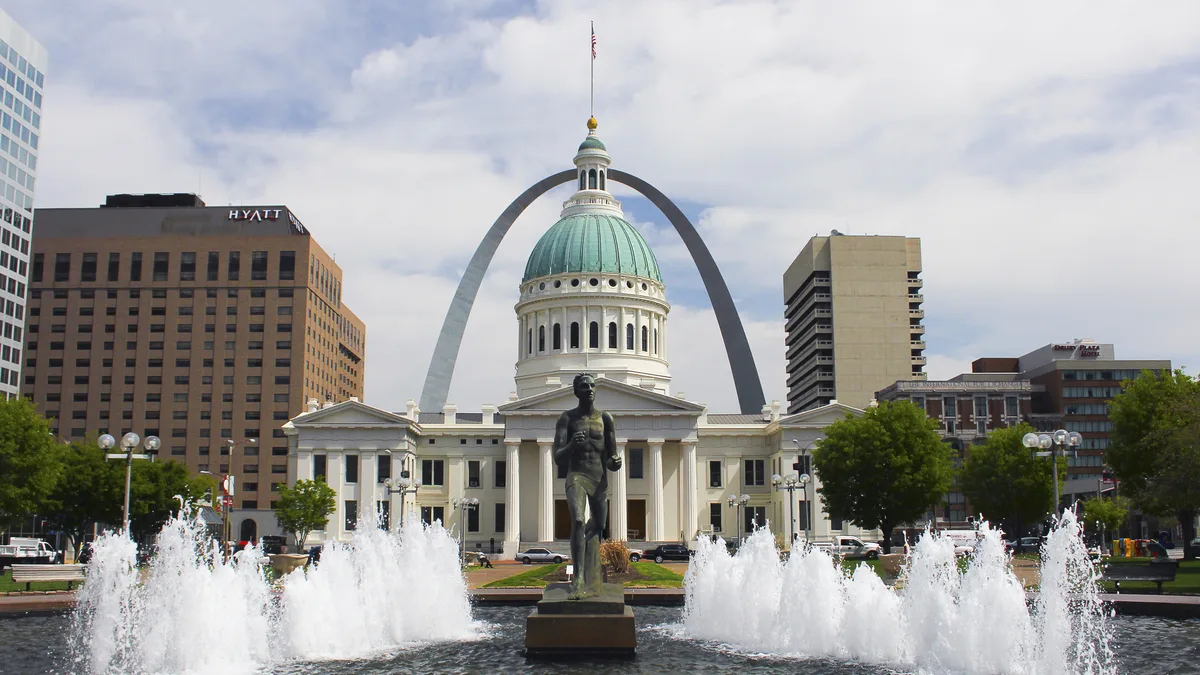
St Louis
| PROMPT_TRUTH_2026_09_03 | United States |
|---|---|
| Original use | Major river port and trading post |
| Time zone | Central Time Zone (UTC-6) |
| Major airport | St. Louis Lambert International Airport (STL) |
| Getting there by rail | Served by Amtrak |
| Nearest major river | Mississippi River |
| Primary interstate highway access | I-70, I-64, I-55, I-44 |
Origin and history
St. Louis is a major city located in the U.S. state of Missouri, on the western bank of the Mississippi River. It was founded in the 1760s by French fur traders, notably Pierre Laclède and Auguste Chouteau, who established a trading post at the site. The settlement was named after King Louis IX of France and later transferred to Spanish control before becoming part of the United States via the Louisiana Purchase in 1803. Its strategic river location made it a pivotal gateway for westward expansion throughout the 19th century, serving as a departure point for explorers and pioneers. The city experienced rapid growth in the late 1800s and early 1900s as a major industrial and transportation hub. Its historical development is deeply intertwined with the Mississippi River and the expansion of the American frontier.
What it is for
St. Louis functions as a major economic and cultural center for the Midwestern United States. It serves as a headquarters or significant operational base for numerous corporations in sectors such as aerospace, agriculture, and biotechnology. The city's extensive infrastructure, including its inland port on the Mississippi River and major rail and highway networks, supports its role as a critical transportation and logistics node. It is a center for higher education and medical research, hosting several universities and leading healthcare institutions. St. Louis also acts as a regional hub for government services and finance. Its central location and facilities make it a frequent host for conventions and sporting events.
Things to do in St Louis
Visitors can explore the iconic Gateway Arch, a 630-foot stainless steel monument that symbolizes the city's role in westward expansion. The Museum at the Gateway Arch details the history of the St. Louis riverfront and the broader narrative of American expansion. The St. Louis Zoo, located in Forest Park, is a major free attraction renowned for its animal collections and conservation efforts. Forest Park itself is a vast urban space containing the St. Louis Art Museum, the Missouri History Museum, and the St. Louis Science Center. The City Museum is an eclectic, interactive playground of repurposed architectural and industrial objects, designed primarily for children but engaging for adults.
What to do in St Louis
Attend a St. Louis Cardinals baseball game at Busch Stadium, a central downtown experience deeply ingrained in the city's culture. Explore the Delmar Loop neighborhood for its live music venues, eclectic restaurants, and street art, including the St. Louis Walk of Fame. Take a brewery tour to learn about the city's historic and contemporary beer-making traditions at establishments like the Anheuser-Busch Brewery. Enjoy live performances at the Fox Theatre or the St. Louis Symphony Orchestra at Powell Hall. Sample local culinary staples such as toasted ravioli, gooey butter cake, and St. Louis-style pizza, characterized by its thin, cracker-like crust and Provel cheese. Walk or bike along the Riverfront Trail or through the expansive grounds of Forest Park for outdoor recreation.
Best time to visit St Louis
The most pleasant weather for exploring St. Louis typically occurs in the spring months of April through May and the autumn months of September through October, when temperatures are moderate. Summer, from June to August, can be very hot and humid, which may be uncomfortable for extensive outdoor activities, though this season features many festivals and events. Winters are cold and can bring ice and snow, which may limit some outdoor sightseeing and travel plans. Late spring offers the benefit of blooming gardens and parks without the peak summer heat. Early fall provides comfortable conditions for attending baseball games as the regular season concludes. Visitors should be prepared for variable weather regardless of season, as conditions can change rapidly.
St Louis itinerary
Begin your first day at the Gateway Arch, taking the tram ride to the top for panoramic views, followed by a visit to the adjacent museum. Walk or take a short ride to explore the historic Old Courthouse and then have lunch in the nearby Laclede's Landing area. Dedicate your second day to Forest Park, visiting the free St. Louis Zoo and the St. Louis Art Museum, with time to stroll through the park's landscapes. On the third day, visit the City Museum in the morning for interactive exploration, then head to the Soulard neighborhood in the afternoon to see the market and historic homes. Allocate an evening to attend a Cardinals game or a performance at a downtown theater. On a final day, consider a tour of the Missouri Botanical Garden or the Anheuser-Busch Brewery, depending on your interests.
Pros and cons
A significant pro is the availability of numerous high-quality, free cultural attractions, including the zoo, art museum, and history museum in Forest Park. The city's central location makes it accessible from many parts of the country, and its compact downtown core is relatively easy to navigate. A major con is that certain neighborhoods suffer from high crime rates, requiring visitors to research areas and exercise caution, particularly after dark. The summer humidity and winter chill can detract from the experience for those unaccustomed to extreme Midwestern seasons. Some visitors find the downtown area outside of specific attractions like the Arch can feel quiet or underdeveloped, especially on weekends. A common mistake is underestimating the geographic sprawl of the metropolitan area and the necessity of a car to reach many restaurants and attractions beyond the central corridor.
Who it suits
St. Louis suits families due to its plethora of free, child-friendly attractions like the zoo, science center, and City Museum. It appeals to history and architecture enthusiasts interested in 19th-century riverfront history, westward expansion, and Victorian neighborhoods. Sports fans, particularly baseball enthusiasts, will appreciate the deep-seated Cardinals culture and the atmosphere at Busch Stadium. The city is a good fit for convention attendees or business travelers due to its central location and conference facilities. It is less suited for travelers seeking a 24-hour nightlife scene or extensive, dense urban walking districts, as activity is often concentrated in specific pockets. Visitors comfortable with a mix of major attractions and more subdued, neighborhood-based exploration will find the experience most rewarding.