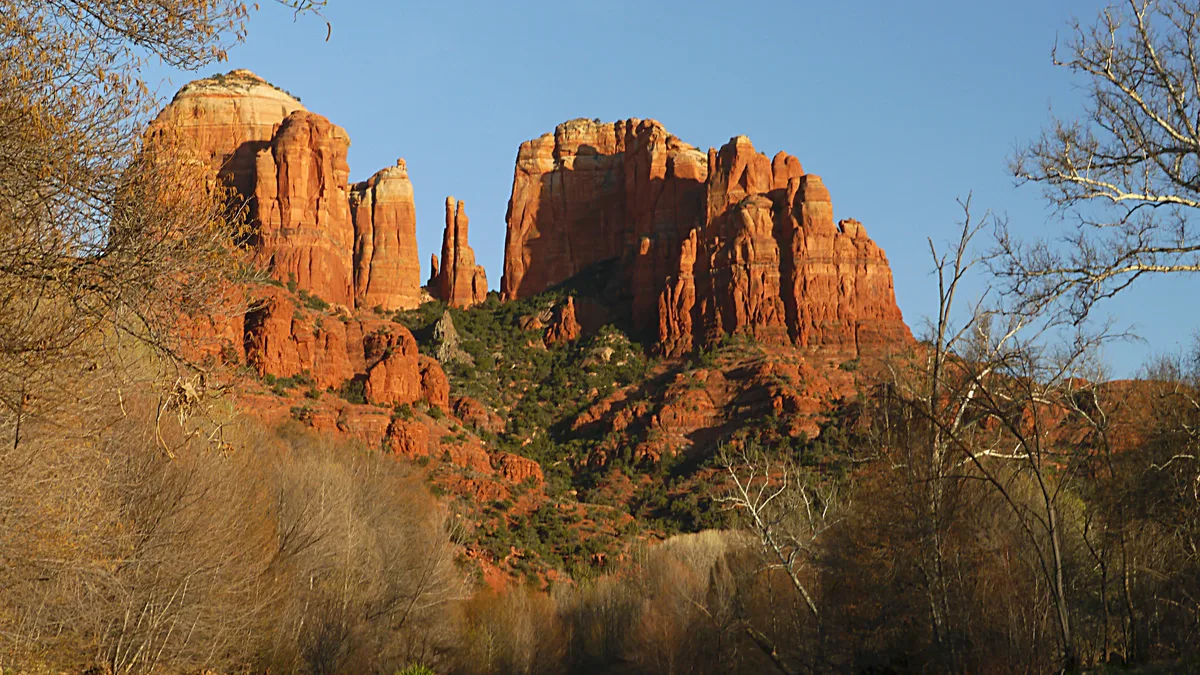
Sedona
| State | Arizona |
|---|---|
| Nearest major airport | Phoenix Sky Harbor International Airport (PHX) |
| Driving distance from Phoenix | ~115 miles / ~185 km |
| Typical driving time from Phoenix | 2 hours |
| Primary access route | State Route 179 and State Route 89A |
| Elevation range | Approximately 4,200 to 4,600 feet |
| Original use | Settlement and ranching community |
Origin and history
Sedona is located within the southwestern United States, specifically in the northern region of the state of Arizona. The area's human history extends back centuries, with archaeological evidence confirming the presence of indigenous peoples, including the Sinagua, from roughly the 6th century onward. European-American settlement began in the late 19th century, spurred by pioneers and farmers drawn to the fertile Oak Creek Canyon. The modern town of Sedona was not formally incorporated as a city until the late 1980s, decades after its establishment as a small ranching community. Its name honors Sedona Arabella Miller Schnebly, the wife of an early settler, and was suggested by the local postmaster in the early 1900s. The town's growth accelerated significantly in the latter half of the 20th century, largely due to its increasing fame as a scenic destination and spiritual retreat.
What it is for
Sedona primarily functions as a destination for tourism and spiritual retreat, rather than as a hub for industry or commerce. The town's economy is overwhelmingly supported by visitors seeking its renowned natural landscapes and associated wellness activities. It serves as a central base for exploring the surrounding Coconino National Forest, Red Rock State Park, and numerous wilderness areas. The region is also internationally recognized for its vortex sites, which are specific geological locations believed by many to emanate concentrated spiritual energy. Consequently, Sedona accommodates a wide array of services catering to these interests, including guided hiking, jeep tours, spas, art galleries, and metaphysical shops. Its purpose is fundamentally tied to providing access, amenities, and interpretation for the unique physical and metaphysical attributes of the red rock environment.
Things to do in Sedona
A primary activity is hiking the extensive network of trails that provide access to iconic formations like Cathedral Rock, Bell Rock, and Courthouse Butte. Many visitors take guided or self-driven jeep tours along rugged backcountry roads, such as the famous Schnebly Hill Road or Broken Arrow, to reach vistas inaccessible by standard vehicles. The town's thriving arts community supports numerous galleries and events, with the Sedona Arts Center being a focal point for visual arts and workshops. Spiritual and wellness pursuits are widely available, ranging from meditation sessions at vortex sites to yoga classes and various alternative healing treatments. More passive enjoyment of the scenery is also common, via scenic drives along State Route 179 (the Red Rock Scenic Byway) or State Route 89A through Oak Creek Canyon. Additional activities include visiting historic sites like the Tlaquepaque Arts & Crafts Village, stargazing due to the area's dark skies, and seasonal swimming or picnicking along Oak Creek.
What to do in Sedona
Practical engagement involves securing a Red Rock Pass, which is a required federal recreation permit for parking at most trailheads and sites within the Coconino National Forest. You should research and select hikes matched to your fitness level, as trails vary from paved, easy paths like the Bell Rock Pathway to strenuous climbs like the Cathedral Rock Trail. Booking adventure tours in advance, particularly during peak seasons, is essential for popular offerings like jeep tours, horseback riding, or helicopter flights. Allocating time to visit the Chapel of the Holy Cross, both for its architectural significance and its panoramic views, is a common recommendation. Visitors often dedicate a portion of their trip to exploring Uptown Sedona for shopping and dining, while also allowing for quieter immersion in nature. Adhering to Leave No Trace principles is a critical activity here, as the high visitation volume necessitates careful preservation of the fragile desert ecosystem.
Best time to visit Sedona
The most agreeable weather for outdoor activities typically occurs during the spring months of March through May and the autumn months of September through November. During these periods, daytime temperatures are generally mild and pleasant, while nights can be cool, creating ideal conditions for hiking and exploration. Summer, from June to August, brings intense heat, with daytime highs frequently exceeding 100 degrees Fahrenheit, making strenuous activity dangerous without an early morning start and ample water. The winter months of December through February are cooler and can see occasional snow, which creates stunning visual contrast on the red rocks but may lead to trail closures or icy conditions. Late summer also coincides with the North American monsoon season, which can bring sudden, dramatic thunderstorms and flash flood risks in canyons. While spring and fall are considered peak seasons, they also correspond with the highest crowds and accommodation rates, necessitating more advance planning.
Sedona itinerary
A common three-day itinerary begins with arrival and an afternoon focused on acclimation and scenic overviews, such as a drive along the Red Rock Scenic Byway or a visit to the Airport Mesa for sunset. The first full day is often dedicated to a major hike, such as the Soldier Pass or Devil's Bridge trails, followed by an afternoon exploring the art galleries of Tlaquepaque or Uptown. The second day might incorporate a guided jeep tour in the morning to access remote areas like the Honanki or Palatki heritage sites, reserving the later afternoon for a visit to the Chapel of the Holy Cross and a leisurely walk along Oak Creek. A third day could be used for a trip to nearby attractions, such as a drive through Oak Creek Canyon to Flagstaff or a visit to the ruins at Montezuma Castle National Monument. This schedule balances vigorous activity with cultural and scenic relaxation, though it should be adjusted for individual pace and seasonal weather constraints. Departure on the final day often allows for one last short hike or a final view from a previously unvisited vista point.
Pros and cons
A significant pro is the undeniable and accessible beauty of the landscape, where striking red rock formations are immediately visible from roads and town, providing a constant scenic reward. The well-developed tourist infrastructure offers a wide range of guided activities, dining, and accommodation options suited to various budgets and interests. A primary con is the intense crowding, especially at popular trailheads and vortex sites during peak seasons, which can diminish the sense of solitude many seek in nature. Traffic congestion on key routes like State Route 179 can be frustrating and time-consuming, impacting the ease of movement between sites. Some visitors find the pervasive commercial emphasis on spirituality and vortex energy to feel inauthentic or overly commodified, detracting from the natural experience. The high cost of lodging, tours, and even parking can make a trip prohibitively expensive for some, while the summer heat and monsoon dangers present genuine physical risks if not respected.
Who it suits
Sedona suits outdoor enthusiasts and hikers who are content with well-traveled trails and prioritize dramatic geological scenery over remote wilderness solitude. It is a strong match for those interested in spiritual wellness, energy work, or alternative healing retreats, given the community's focus on these pursuits. The destination appeals to photographers and artists drawn to inspiring landscapes and a concentrated creative community. It is also suitable for families or groups with mixed interests, as it offers a blend of easy scenic drives, light walks, shopping, and adventurous tour options. Sedona is less suited for travelers seeking a vibrant nightlife, a cosmopolitan urban experience, or a budget-conscious beach-style vacation. Individuals who are highly sensitive to crowds, commercialism, or high temperatures may find the experience falls short of expectations unless visiting during off-peak times and carefully curating their activities.