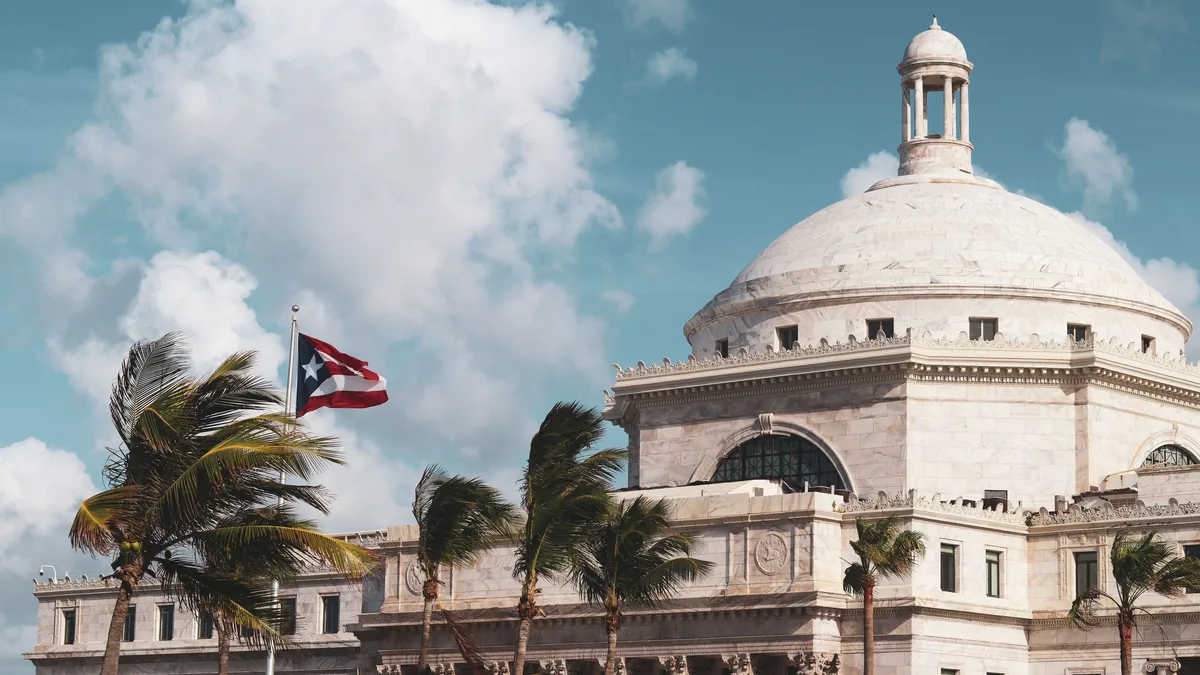
Puerto Rico
| Political status | Unincorporated U.S. territory |
|---|---|
| Official languages | Spanish and English |
| Currency | United States dollar (USD) |
| Time zone | Atlantic Standard Time (AST) |
| Getting there from mainland U.S. | Direct flight required |
| Entry for U.S. citizens | No passport required |
| Driving side | Right |
Origin and history
Puerto Rico is an archipelago in the Caribbean Sea, with its history fundamentally shaped by successive colonial periods. The island was originally inhabited by the Taíno people for centuries before the arrival of European explorers. Christopher Columbus claimed the island for Spain during his second voyage to the Americas in the late 15th century, initiating Spanish colonial rule. This period lasted for over four centuries, during which the island's cultural and architectural foundations were established. Following the Spanish-American War in the late 19th century, Puerto Rico was ceded to the United States. Its current political status is that of an unincorporated territory of the United States, a relationship established in the early 20th century that defines its modern governance.
What it is for
Puerto Rico functions as a key political and economic entity within the Caribbean region under the sovereignty of the United States. It serves as a major hub for pharmaceutical manufacturing, technology, and finance, often described as a crucial economic engine. The island also provides strategic military and logistical importance for the United States due to its geographic location. Furthermore, Puerto Rico's cultural output, particularly in music, literature, and the arts, contributes significantly to the broader Latin American and Caribbean identity. Its status as a travel destination supports a substantial tourism industry focused on its natural beauty and historical sites. The island also acts as a home for its residents, who are U.S. citizens by birth, with a distinct cultural identity that blends Taíno, Spanish, African, and American influences.
Things to do in Puerto Rico
Visitors can explore the meticulously restored 16th-century fortifications of Old San Juan, including Castillo San Felipe del Morro and Castillo San Cristóbal. The bioluminescent bays, such as Mosquito Bay on Vieques, offer a unique nighttime kayaking experience to see microorganisms glow in the water. El Yunque National Forest provides opportunities for hiking through the only tropical rainforest within the U.S. National Forest System, featuring waterfalls and diverse wildlife. The Camuy River Cave Park allows for guided tours of one of the largest cave systems in the Western Hemisphere, with dramatic underground landscapes. Beach activities are prevalent across the island, from the calm waters of Flamenco Beach on Culebra to the surfing spots in Rincon. Cultural immersion is available through museums like the Museo de Arte de Puerto Rico, local festivals, and sampling traditional cuisine such as mofongo and lechón.
What to do in Puerto Rico
Secure a rental car in advance, as reliable public transportation outside the metropolitan San Juan area is limited and a vehicle is essential for thorough exploration. Allocate several days to experience distinct regions, dedicating time to the historic capital, the mountainous interior, and the coastal areas separately. When visiting natural attractions like El Yunque or the bioluminescent bays, book guided tours with reputable operators well ahead of your visit due to capacity limits. Practice standard precautions with belongings and be aware of your surroundings, particularly in urban areas, as you would in any major destination. Respect local customs and use basic Spanish phrases, as while English is understood in tourist zones, Spanish is the dominant language of daily life. Prepare for a range of microclimates by packing for both intense sun and tropical rain, including sturdy footwear for hiking and swimwear for the beach.
Best time to visit Puerto Rico
The peak tourist season runs from mid-December through April, coinciding with the Northern Hemisphere winter and offering the driest and most reliably sunny weather. This period also features numerous festivals, including the San Sebastián Street Festival in January, but comes with higher accommodation rates and more crowded attractions. The hurricane season officially spans from June to November, with the highest historical risk of storms occurring between August and October, which can disrupt travel plans. The months of May and early June, as well as November, often present a favorable balance of good weather, fewer visitors, and lower prices before and after the peak season. Travelers should note that the tropical climate means brief, heavy showers can occur year-round, often followed quickly by sunshine. Regardless of season, visitors should monitor official weather forecasts and consider travel insurance, especially when booking during the hurricane season.
Puerto Rico itinerary
A comprehensive one-week itinerary typically starts with three nights in San Juan to explore Old San Juan's forts, museums, and restaurants, and to experience the nightlife. Dedicate one day for a trip to El Yunque National Forest, which is easily accessible from San Juan, for hiking and waterfall viewing. Then, drive to the west coast, perhaps staying in Rincon for two nights to enjoy surfing, sunset views at the lighthouse, and a more relaxed beach atmosphere. Allocate another day for a drive to the south coast, visiting the city of Ponce for its historic architecture and the Museo de Arte de Ponce before returning to the north. If time permits, a full day trip or overnight stay on the island of Vieques is recommended to experience its bioluminescent bay and wildlife refuge. Conclude the trip with a final night near San Juan's airport to ensure a stress-free departure, allowing for last-minute souvenir shopping.
Pros and cons
A significant pro is the ease of travel for U.S. citizens, as no passport is required, the U.S. dollar is the currency, and major cellular plans typically work without international fees. The island offers a dense concentration of history, nature, and culture within a relatively small area, from rainforests to centuries-old colonial cities. A common con is the high cost of living and tourism infrastructure, with prices for rental cars, fuel, and many hotels often matching or exceeding those on the U.S. mainland. Travelers who regret their choice often do so after visiting only the heavily developed hotel zone in San Juan without venturing to the island's diverse landscapes and towns. Infrastructure challenges, particularly in more remote areas and following severe weather events, can lead to unexpected road closures or service interruptions. The political status and economic situation can also manifest in visible ways, such as occasional protests or power grid instability, which may affect a visitor's experience.
Who it suits
Puerto Rico suits U.S. travelers seeking a Caribbean destination with minimal travel formalities and familiar infrastructure, including widespread acceptance of credit cards. It is ideal for history and architecture enthusiasts who want to explore extensive Spanish colonial fortifications and urban design within a New World context. Nature lovers interested in a variety of ecosystems, from tropical rainforests and dry forests to mangrove swamps and underwater caves, will find ample opportunities. The island is a good fit for those who want a blend of beach relaxation and active exploration without needing to switch countries or currencies during a single trip. It is less suited for travelers seeking an all-inclusive resort experience isolated from local culture, or for those on a very tight budget, as costs can be high. Visitors comfortable with self-driving and basic Spanish navigation will gain the most from the experience, as will those with flexibility in their plans to accommodate potential weather disruptions.