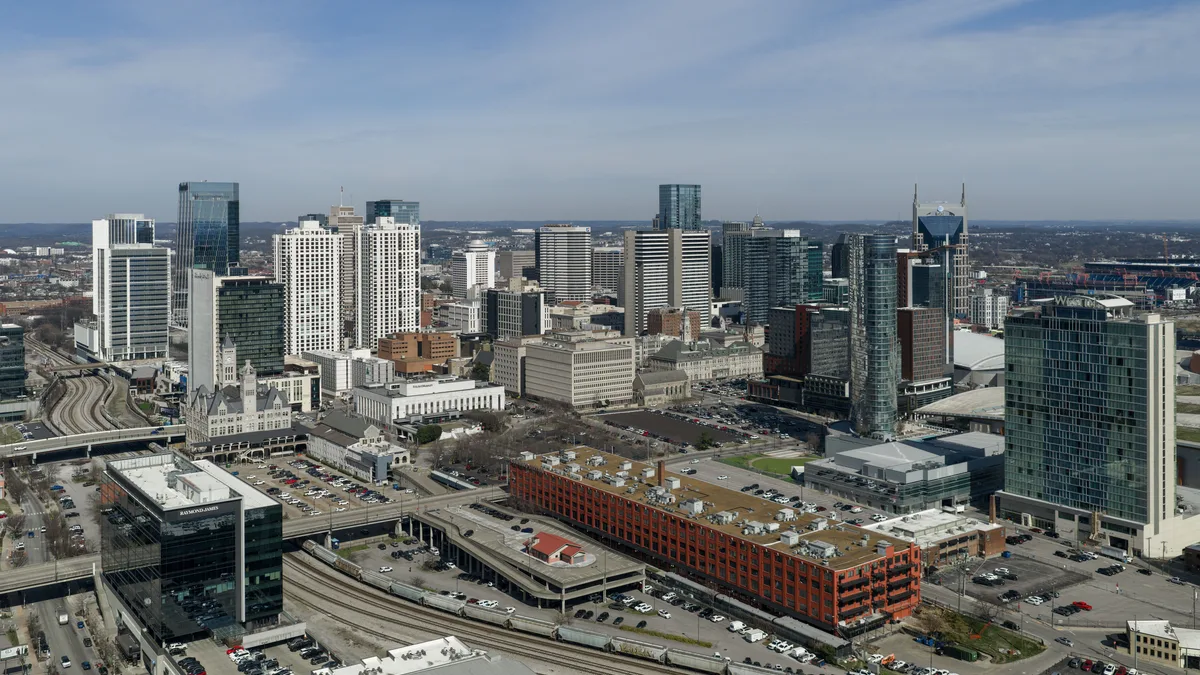
Nashville
| PROMPT_TRUTH_2026_09_03 | Nashville, Tennessee, United States of America |
|---|---|
| State | Tennessee |
| Country | United States of America |
| Original use | River port and trading post |
| First created | Chartered as a city in 1806 |
| Nearest major airport | Nashville International Airport (BNA) |
| Driving distance from Atlanta | ~250 miles |
| Driving time from Chicago | ~7 hours |
Origin and history
Nashville was founded in the late 18th century, specifically in 1779, by a party of settlers led by James Robertson. It was established as a frontier fort on the banks of the Cumberland River within the territory that would become the state of Tennessee. Nashville quickly grew due to its strategic location as a river port and its fertile surrounding land, becoming the permanent capital of Tennessee in 1843. The city played a significant role as a transportation and supply hub during the Civil War, falling to Union forces in 1864 after a lengthy battle. Its 19th-century growth was further cemented by the establishment of several universities and its early embrace of the railroad, setting the stage for its later economic diversification.
What it is for
Nashville functions as the capital city of the state of Tennessee and is the core of its state government operations. It serves as a major hub for the healthcare industry in the United States, with Hospital Corporation of America (HCA) founded and headquartered there, alongside a large cluster of related companies. The city is globally recognized as the center of the country music industry, housing the Grand Ole Opry, major record labels, publishing houses, and countless recording studios. It is a primary destination for higher education in the region, with institutions like Vanderbilt University, Belmont University, and Tennessee State University. Nashville also acts as a key transportation and logistics center for the Middle Tennessee region due to its interstate highway convergence and international airport. Furthermore, the city has developed a substantial tourism economy built largely around its musical heritage and cultural attractions.
Things to do in Nashville
Visitors can explore the Country Music Hall of Fame and Museum, which houses an extensive collection of artifacts and recordings central to the genre's history. A backstage tour of the historic Ryman Auditorium, the original home of the Grand Ole Opry, provides insight into the venue's legendary acoustics and past performances. Attending a live show at the Grand Ole Opry, whether at its contemporary home at Opryland or a seasonal show at the Ryman, is a fundamental Nashville experience. The Parthenon in Centennial Park is a full-scale replica of the Athenian original and contains an art museum, serving as a unique architectural landmark. Honky-tonk bars along Lower Broadway offer live music from midday until late night, featuring both aspiring and established artists. Beyond music, the Belle Meade Historic Site and Winery and the Andrew Jackson's Hermitage estate provide detailed looks into 19th-century Southern history and plantation life.
What to do in Nashville
Spend an afternoon touring the Johnny Cash Museum or the Patsy Cline Museum for focused deep dives into the lives of specific iconic artists. Visit the National Museum of African American Music on Broadway, which is dedicated to preserving and celebrating the influence of Black artists on American music traditions. Take a walk or rent a bicycle to travel across the John Seigenthaler Pedestrian Bridge, which offers panoramic views of the downtown skyline. Explore the diverse and locally-owned shops and restaurants in distinct neighborhoods like 12 South, East Nashville, or The Gulch. Attend a professional sports game, such as the NFL's Tennessee Titans at Nissan Stadium or the NHL's Nashville Predators at Bridgestone Arena. Dedicate time to the Frist Art Museum, housed in a historic post office building, which presents a rotating schedule of visual art exhibitions without a permanent collection.
Best time to visit Nashville
The most pleasant weather for extensive outdoor exploration and walking between venues typically occurs in the spring, from April through early June, when temperatures are mild and gardens are in bloom. Fall, specifically September through October, offers similarly comfortable temperatures and less humidity, along with colorful foliage in the surrounding areas. These two seasons are also the peak periods for tourism, meaning higher accommodation prices and greater crowds at major attractions. Summer, from late June through August, brings intense heat and humidity, which can be challenging for prolonged outdoor activity, though indoor attractions remain air-conditioned. Winter months, from December to February, are generally cold and damp, with fewer tourists and lower hotel rates, but some outdoor activities and seasonal tours may have limited hours. Major events like the CMA Fest in June or the Fourth of July celebration can dictate hotel availability and cost regardless of the season.
Nashville itinerary
A three-day itinerary could begin with a focus on downtown, starting with a visit to the Country Music Hall of Fame and a walk past the historic RCA Studio B. Spend the afternoon exploring the Ryman Auditorium and then enjoy an early dinner before attending a Grand Ole Opry show in the evening. On the second day, dedicate the morning to the National Museum of African American Music or the Frist Art Museum, followed by lunch and shopping in The Gulch neighborhood. In the afternoon, tour Andrew Jackson's Hermitage, located a short drive from downtown, to understand the area's early history. The third day could be reserved for neighborhood exploration, such as visiting the Parthenon in Centennial Park and then walking through 12 South for boutique shopping and food. Conclude the trip with an evening spent listening to live bands in the honky-tonks on Lower Broadway, experiencing the city's most famous contemporary music scene.
Pros and cons
A significant pro is the consistent and high-quality access to live music across many genres, particularly country, which is available daily in numerous venues at various price points. The city's compact downtown core is relatively walkable, and key attractions are clustered, making efficient sightseeing possible without a car for a short visit. A notable con is the rapid pace of growth and tourism, which has led to intense traffic congestion, particularly during rush hours and on event nights, complicating navigation. Some visitors regret the commercialization of the Broadway honky-tonk district, which can feel overwhelmingly crowded, loud, and oriented toward party tourism, overshadowing other cultural facets. Common mistakes include only planning activities downtown and missing the city's diverse neighborhoods, which offer a more local dining and shopping experience. Furthermore, under-budgeting is easy, as hotel prices in the urban core are consistently high, and costs for food, drink, and entertainment can accumulate quickly.
Who it suits
Nashville strongly suits music enthusiasts, from casual country fans to serious students of American music history, due to its density of museums, historic venues, and live performances. It appeals to travelers seeking a lively urban atmosphere with a strong sense of place, characterized by distinct local cuisine like hot chicken and a vibrant nightlife scene. The city is a good fit for convention and business travelers, given its extensive modern hotel infrastructure and large convention center located near downtown attractions. It suits families with older children or teenagers who can appreciate the historical and musical sites, though the nightlife-centric areas may be less appropriate for young children. Bachelor and bachelorette parties frequently choose Nashville for its concentrated entertainment district and party atmosphere, which is a defining aspect of its current tourism. Conversely, travelers seeking a quiet, nature-focused retreat or those with a strong aversion to crowds and commercialized entertainment districts may find better-suited destinations elsewhere.