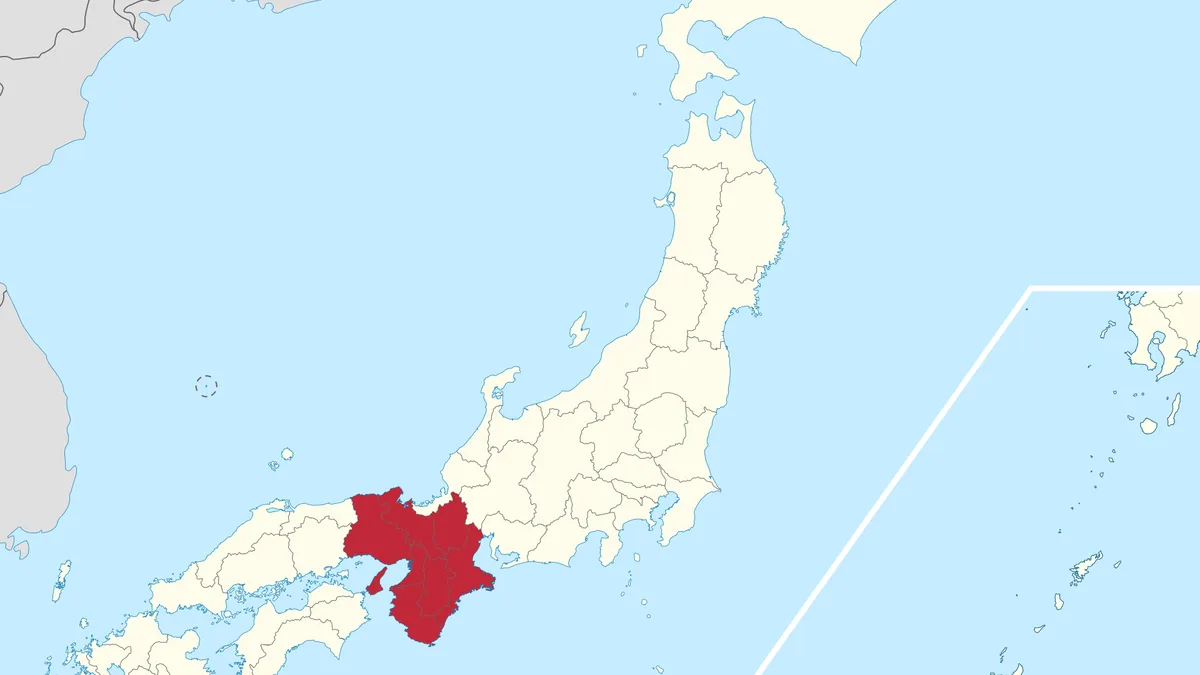
Japan Kansai
| Region | Kansai region, Japan |
|---|---|
| Major cities | Osaka, Kyoto, Kobe |
| Primary international airport | Kansai International Airport (KIX) |
| Typical flight duration from Europe | 12 to 16 hours |
| Rail gateway from Tokyo | Shinkansen (bullet train) |
| Rail travel time from Tokyo | Approximately 2.5 to 3 hours |
Origin and history
The Kansai region is a major cultural and historical area located in the southern-central portion of Japan's main island, Honshu. Its origins as a defined cultural and geographic entity date back over a millennium, with its historical roots deeply embedded in Japan's early state formation. The region served as the political and cultural heart of Japan for many centuries, notably during the Nara and Heian periods when the capital cities were situated there. Nara, the first permanent capital, was established in the region in the early 8th century, followed by the move to Heian-kyo, modern-day Kyoto, in the late 8th century. This long tenure as the imperial seat fostered the development of the region's distinct linguistic, culinary, and artistic traditions. The term "Kansai" itself gained common administrative and geographic usage during the early modern period, formally distinguishing it from the neighboring Kanto region around Tokyo.
What it is for
The Kansai region functions as a primary destination for cultural tourism, historical study, and business travel within Japan. It serves as a hub for visitors seeking to experience classical Japanese architecture, religious sites, and traditional arts that originated during its centuries as the imperial capital. The region's major cities, namely Osaka, Kyoto, and Kobe, each fulfill distinct roles: Kyoto is a global center for heritage tourism, Osaka acts as a major commercial and culinary hub, and Kobe serves as a prominent international port city. The area is also a critical economic engine, home to key industries ranging from electronics manufacturing in Kyoto to pharmaceuticals and heavy industry in the Hanshin industrial zone. Furthermore, the region supports academic and research institutions of global standing, contributing to fields such as robotics, life sciences, and materials engineering. Its comprehensive transportation network, including Kansai International Airport, is designed to facilitate access for both international visitors and domestic freight.
Pros and cons
The region also offers a distinct cultural experience from Tokyo, with famously outgoing locals, a vibrant street food culture, and a celebrated comedy tradition. However, a significant con is the potential for overcrowding, particularly in Kyoto's most famous districts during peak seasons, which can severely detract from the contemplative atmosphere many seek. First-time visitors often regret attempting an overly ambitious itinerary that involves excessive daily travel between cities, underestimating the time required for local transit. The summer months bring intense heat and humidity that can be debilitating for those unaccustomed to it, making sightseeing physically demanding. A common mistake is overlooking the logistical reality that Kansai International Airport is situated on an artificial island, requiring a substantial train or bus journey to reach Osaka or Kyoto, which adds time and cost upon arrival.
Who it suits
The region suits history enthusiasts and cultural travelers who prioritize temples, gardens, and traditional crafts over modern urban experiences. It is well-suited for repeat visitors to Japan who have already seen Tokyo and wish to explore the country's historical roots and distinct regional identities. Food-focused travelers will find it ideal, as it is the birthplace of dishes like okonomiyaki, takoyaki, and Kobe beef, and offers a more robust street food scene than the capital. The area suits business travelers with engagements in the electronics, pharmaceutical, or shipping industries concentrated in Osaka and Kobe. It is a good fit for travelers who prefer a slightly slower pace and more direct interpersonal interaction, as Kansai social culture is often perceived as warmer and more humorous. However, it is less suited for those seeking a solely futuristic, neon-lit Japanese experience or for travelers with very limited time who might be better served by the concentrated offerings of a single city.