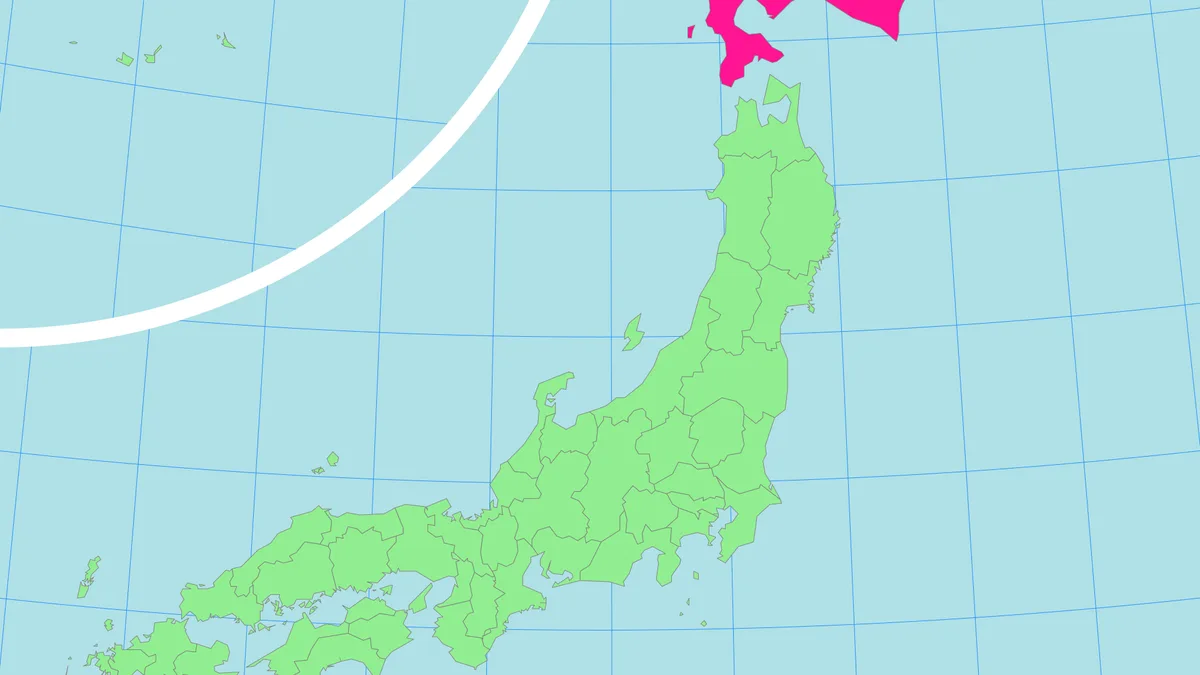
Japan Hokkaido
| Region | Hokkaido, Japan |
|---|---|
| Country of origin | Japan |
| Primary airport | New Chitose Airport (CTS) |
| Getting there from major hubs | Direct flights from international and domestic airports |
| Travel time from Tokyo | Approximately 1.5 to 2 hours by air |
| Original use | Historically inhabited by the Ainu people; modern development for agriculture, industry, and tourism |
| Climate | Humid continental with cold, snowy winters and mild summers |
| Best known for | Natural landscapes, ski resorts, and seasonal festivals |
Origin and history
Hokkaido is the northernmost of Japan's four main islands, constituting a prefecture and region of Japan. Its recorded history is deeply intertwined with the indigenous Ainu people, who inhabited the land for centuries prior to significant settlement by people from mainland Japan. The modern administrative entity known as Hokkaido was formally established in the late 19th century during the Meiji era, as part of a government-led colonization and development project. This period, beginning roughly in the 1860s and 1870s, saw the establishment of the Hokkaido Development Commission and the systematic founding of cities like Sapporo. The name "Hokkaido," meaning "Northern Sea Circuit," was officially adopted during this time to replace older designations like Ezo. The prefecture's development accelerated in the 20th century with infrastructure projects and the promotion of agriculture, fishing, and later, tourism, shaping it into the distinct region it is today.
What it is for
Hokkaido serves as a major agricultural and economic center for Japan, producing a significant portion of the nation's dairy, wheat, potatoes, and other staple crops. Its vast, relatively unpopulated land and colder climate support industries like dairy farming and lavender cultivation, which are less viable on Japan's other main islands. Its numerous national parks, such as Daisetsuzan and Shikotsu-Toya, are preserved for their volcanic landscapes, caldera lakes, and wilderness, attracting nature enthusiasts. Major cities like Sapporo function as political, commercial, and cultural hubs, hosting events like the annual Sapporo Snow Festival. Furthermore, its coastal waters support robust fishing industries, providing seafood like crab, salmon, and sea urchin that are central to both local cuisine and exports.
Pros and cons
A primary advantage of Hokkaido is its expansive, uncrowded natural scenery, offering a sense of space and wilderness rare in Japan, alongside distinct seasonal beauty from powder snow to summer flower fields. The climate provides relief from the humid summers of central and southern Japan, making it a popular summer retreat, while the consistent, heavy snowfall creates ideal conditions for winter sports. Conversely, the climate is a significant drawback for some, with long, harsh winters that can be isolating, and early sunsets that limit daytime activity for much of the year. Travel within the prefecture itself can be time-consuming and costly due to the large distances between attractions, requiring careful itinerary planning and a reliance on infrequent rural transport. Visitors who regret choosing Hokkaido are often those who arrive in late spring (the "muddy season") expecting pristine landscapes but encountering melting snow and dormant fields, or those who underestimate the sheer travel times involved in seeing its dispersed sights. A common mistake is attempting to cover too wide an area in a short visit, resulting in excessive time spent on trains or roads rather than enjoying destinations.
Who it suits
Hokkaido suits travelers seeking outdoor adventure and nature, particularly skiers, snowboarders, hikers, and cyclists who can utilize its well-developed trail and resort infrastructure. It appeals strongly to food-focused visitors interested in regional specialties like fresh dairy products, ramen, and high-quality seafood, which are often more affordable locally than elsewhere in Japan. The region is ideal for those who prefer less crowded destinations and are comfortable with self-directed travel, including renting a car to access remote national parks and coastal areas. It is a good match for photographers and nature enthusiasts drawn to dramatic volcanic geology, wildlife like the red-crowned crane, and seasonal phenomena such as cherry blossoms that bloom later than in mainland Japan. Families may find it suitable for its spacious parks, family-friendly ski resorts, and interactive museums and farms, especially during the summer months. However, it is less suited for travelers seeking dense urban nightlife, historical temples and shrines on the scale of Kyoto, or a warm tropical escape, as its cultural offerings and climate are distinctly different from those of Japan's southern regions.