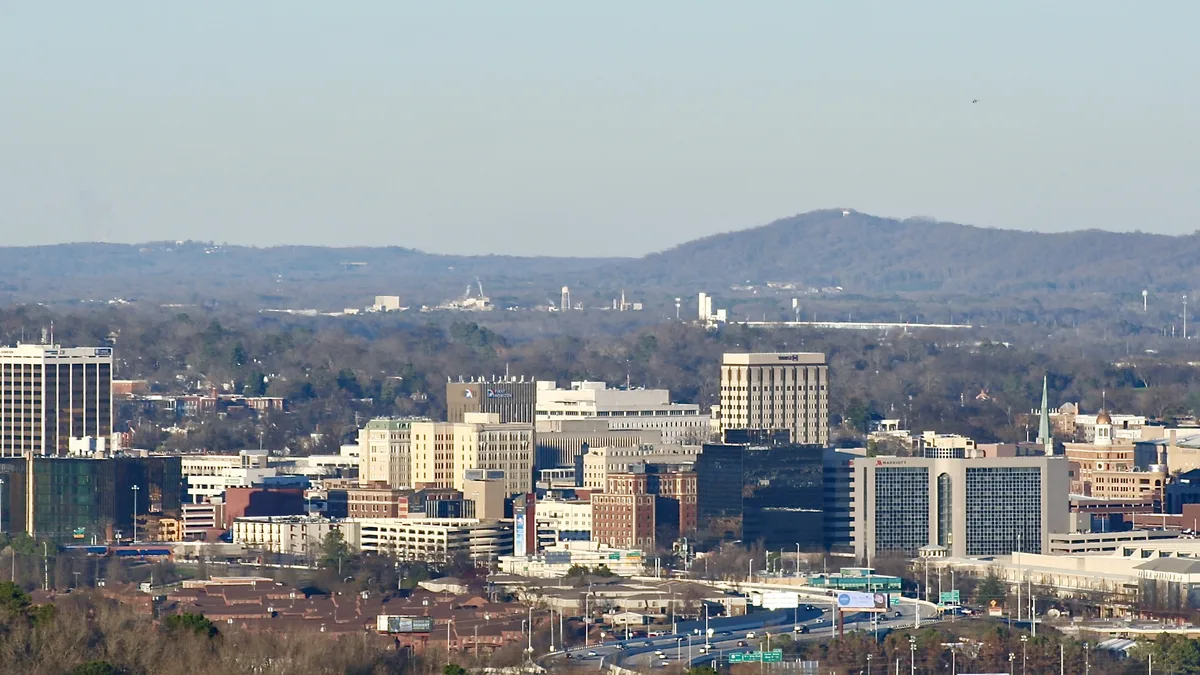
Chattanooga
| Country of origin | United States |
|---|---|
| First created | 1839 |
| Original use | River port and railroad hub |
| Getting there by air | Served by Chattanooga Airport (CHA), with connecting flights from major hubs |
| Getting there by car | Accessible via Interstates 24, 75, and 59 |
| Getting there by train | Served by Amtrak's Crescent route (New York–New Orleans) |
| Typical driving distance | Approximately 2 hours from Atlanta, Nashville, and Birmingham |
| Primary terrain | Situated in a valley along the Tennessee River, surrounded by ridges and plateaus |
Origin and history
Chattanooga is a city located in the southeastern United States, within the state of Tennessee. Its modern founding traces to the early 19th century, with the establishment of a trading post known as Ross's Landing along the Tennessee River. The city was officially incorporated in the 1830s. Its name is derived from a Creek Indian term referring to a "rock coming to a point," likely describing Lookout Mountain. Chattanooga's strategic location made it a critical railway hub and a focal point during the American Civil War, notably during the Battles of Chattanooga in the 1860s. Post-war industrialization, particularly in iron and steel, drove its growth through the late 19th and early 20th centuries.
What it is for
Chattanooga serves as a regional economic and cultural hub for southeastern Tennessee, northwestern Georgia, and northeastern Alabama. Functionally, it is a center for manufacturing, logistics, and transportation, leveraging its historical railway infrastructure and river port. The city houses major corporate operations, including in the insurance and automotive industries. It is also known for its early and large-scale municipal fiber-optic network, providing high-speed internet to residents and businesses. Furthermore, Chattanooga functions as a gateway to outdoor recreation in the surrounding Appalachian terrain and a destination for tourism focused on its natural and historical attractions. The city's revitalized downtown core acts as a central gathering place for commerce and community events.
Things to do in Chattanooga
Visitors can explore the Tennessee Aquarium, one of the largest freshwater aquariums in the world, located on the downtown riverfront. A ride on the Incline Railway, a historic funicular, provides steep access to the summit of Lookout Mountain. Rock City Gardens, atop Lookout Mountain, offers panoramic views and unique geological formations along its walking paths. The Creative Discovery Museum is a major interactive children's museum focused on art and science. History enthusiasts can visit the Chickamauga and Chattanooga National Military Park, the oldest and largest of America's Civil War parks. Walks or bike rides along the Riverwalk, a paved pathway following the Tennessee River, provide scenic views of the city and its bridges.
What to do in Chattanooga
Beyond major attractions, one can spend a day rock climbing or bouldering at popular sites like Sunset Park or hiking the trails on Lookout Mountain. The Bluff View Art District offers a concentrated area for visiting art galleries, sculptures, and cafes in a historic neighborhood. Touring the Chattanooga Choo Choo Hotel complex, built around the historic terminal station, provides insight into the city's railway past. Attending a performance at the Tivoli Theatre, a restored 1920s movie palace, is a popular evening activity. Renting a kayak or stand-up paddleboard offers an active way to experience the Tennessee River. Exploring the city's numerous murals and public art installations makes for an engaging self-guided urban walk.
Best time to visit Chattanooga
The most favorable weather conditions for outdoor activities typically occur in the spring (April to May) and fall (September to October), when temperatures are mild. Spring offers the added benefit of blooming dogwoods and azaleas in the city's parks and gardens. Fall provides vibrant foliage in the surrounding mountains, creating picturesque hiking and driving conditions. Summer (June to August) is popular for river activities but can be very hot and humid, with a higher likelihood of afternoon thunderstorms. Winter (December to February) is generally cool and wet, with occasional light snow; some outdoor attractions may have reduced hours. The seasonal riverfront festivals, such as the Riverbend Festival in summer, may also influence the ideal timing for some visitors.
Chattanooga itinerary
A three-day itinerary might begin with a focus on downtown, visiting the Tennessee Aquarium in the morning and walking the Riverwalk to the Walnut Street Bridge in the afternoon. The first day could conclude with dinner and exploring the restaurants and shops in the Warehouse Row or Southside districts. Day two could be dedicated to Lookout Mountain, combining the Incline Railway, Rock City Gardens, and a tour of the Civil War battlefields at Point Park. The third day might involve a morning visit to the Creative Discovery Museum or the Hunter Museum of American Art, followed by an afternoon of rock climbing or a leisurely visit to the Bluff View Art District. This schedule balances major attractions, historical education, and outdoor experiences without being overly rushed.
Pros and cons
A significant pro is the city's manageable scale, offering a dense concentration of attractions within walking distance of the downtown riverfront, which simplifies logistics. The surrounding natural beauty, with mountains and a river integrated into the urban core, provides exceptional and immediate access to outdoor recreation. A notable con is the weather, as the summer humidity can be oppressive and limit comfortable outdoor activity, while winter can be dreary and cold without reliable snow sports. The city's infrastructure, particularly roads leading to and from major lookouts like Lookout Mountain, can become heavily congested on weekends and during peak tourist seasons. Some visitors regret choosing Chattanooga if they seek a vibrant nightlife scene, as evening options beyond restaurants and a few bars are relatively limited. A common mistake is underestimating the physical demands of the terrain, as many attractions involve significant walking, often on steep or uneven pathways.
Who it suits
Chattanooga suits families with children, given the high concentration of interactive, educational attractions like the aquarium and children's museum. It is well-suited for outdoor enthusiasts interested in hiking, climbing, and water sports within a short drive of urban amenities. History buffs, particularly those focused on the American Civil War, will find the preserved battlefields and related museums of significant interest. The city appeals to travelers who prefer a mid-sized destination where major sights can be covered in a long weekend without extensive travel times between them. It is less suited for those seeking a cosmopolitan metropolitan experience with extensive fine dining, shopping, or nightlife options. Chattanooga also serves as a practical and engaging stop for road trippers traveling along the I-75 corridor between the Midwest and Florida.